
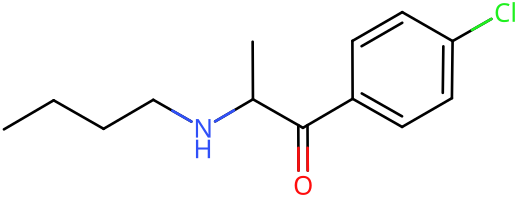
4-CBC Stats & Data
[Cl-].CCCCNC(C)C(=O)c1ccc(Cl)cc1.[H+]DKPILUWUWJLVPE-UHFFFAOYSA-NReceptor Profile
Receptor Actions
Effect Profile
CuratedStrong sensory enhancement and euphoria with moderate stimulation, mild empathy
Strong euphoria with strong anxiety/jitters, moderate focus, mild stimulation
Tolerance & Pharmacokinetics
drugs.wikiTolerance Decay
Cathinone-class tolerance tends to build quickly with daily or binge use and decays over 1–3+ weeks. Cross-tolerance within dopaminergic releasers is probable though incompletely quantified; values are heuristic from user patterns rather than controlled studies.
Cross-Tolerances
Harm Reduction
drugs.wiki• ID and purity: 4-CBC appears on the market alongside other 3-/4-halogenated cathinones; reagent tests are not definitive for identity—use GC–MS/LC–MS when possible and treat untested powders as unknown potency. • Dosing discipline: Use a milligram scale; avoid 'eyeballing' due to narrow comfort-to-adverse range. Begin with a 1–5 mg allergy test and wait a full onset window before any further dosing. • Redosing: Because effects are short and dopaminergic, limit sessions to ≤250 mg total and ≥3 h between doses to reduce compulsive binges and cardiostrain. • Hydration/temperature: Sip 250–500 ml isotonic fluid per hour during exertion; avoid overdrinking plain water to reduce hyponatremia risk. Take cooling breaks in hot environments. • Cardiovascular caution: Expect tachycardia, BP elevation, and vasoconstriction; avoid if you have uncontrolled hypertension, arrhythmia, or cardiovascular disease. Seek urgent care for chest pain, severe headache, or temperature >38.5°C. • Seizures: Stimulants and several common meds (e.g., tramadol, bupropion) reduce seizure threshold; avoid polydrug use in this category and stop use if aura or myoclonus appears. • Nasal harm: Insufflation increases local irritation and compulsive redosing; if used intranasally, employ small lines, space doses, and rinse with sterile saline after. Prefer oral dosing for lower mucosal harm. • Mental health: Anxiety, low mood, and anhedonia are common during the comedown; avoid use if you have active psychosis, bipolar mania, or severe anxiety disorders. Ensure post-use sleep, nutrition, and social support. • Sleep agents: Avoid mixing with alcohol, opioids, or high-dose benzodiazepines to 'come down'—this increases respiratory and decision-risk; if sedation is needed, wait until heart rate and BP normalize and use only minimal doses under medical guidance. • Tolerance/spacing: Allow at least 2 weeks between sessions; frequent use rapidly raises tolerance and worsens mood crashes. • Drug checking: Some halogenated cathinones share similar reagent colors; confirmatory lab testing (FTIR/GC–MS/LC–MS) is strongly recommended, especially to distinguish from 4-CMC/3-CMC.
References
Cited References
- Andrzejczak D et al. Case series of 4-CBC intoxications in Poland, 2019
- EMCDDA: 4-Chlorobuphedrone En
- EMCDDA Europol Early-Warning Report: 4-Chlorobuphedrone
- Grifell M et al. Patterns of use and toxicity of new para-halogenated substituted cathinones
- Grigoryev A et al. Identification and analytical characterization of 4-chlorobuphedrone
- Jamey C et al. Pharmacological profile of halogenated cathinones including 4-CBC
Additional references
- EMCDDA/Europol Early-Warning Report on halogenated cathinones (incl. 4-CBC)
- Grigoryev A. et al. Identification and analytical characterization of 4-chlorobuphedrone
- Jamey C. et al. In vitro pharmacology of halogenated cathinones
- Andrzejczak D. Case reports of 4-CBC intoxications (2019)
- TripSit Drug Combination Chart (stimulants; MAOI risk; serotonin interactions)
- Erowid Cathinones & Stimulants Basics (harm-reduction guidance)
- drugchecking.community – importance of confirmatory testing (FTIR/GC–MS)