
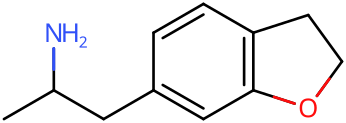
6-APDB Stats & Data
CC(N)Cc1ccc2CCOc2c1VRNGXHJGMCJRSQ-UHFFFAOYSA-NReceptor Profile
Receptor Actions
Toxicity
PsychonautWikiDue to only having a short history of human use, the toxicity and harm potential is not exactly known. Due to its similarity to MDMA, it is likely that the administration of repeated or high dosages of 6-APDB can be neurotoxic and cardiotoxic in some form. The exact toxic dosage is unknown. It is strongly recommended that one use harm reduction practices when using this drug.
Effect Profile
Curated + 1 ReportsStrong visuals and auditory effects with mild body load, low headspace
Strong euphoria, sensory enhancement, and empathy with moderate stimulation
Strong euphoria with strong anxiety/jitters, moderate stimulation and focus
Tolerance & Pharmacokinetics
drugs.wikiNo tolerance chart. No study has measured how long tolerance to it lasts, so this page shows what is known instead of a curve.
No study has measured tolerance to 6-APDB in people. PsychonautWiki estimates that tolerance halves in 21-30 days and is gone in 2-3 months, without citing a source.
Sources: PsychonautWiki: 6-APDB
Experience Report Analysis
ErowidDemographics
Gender Distribution
Too few reports for a chart: gender is known from 2 reports, and a split is drawn only from 20 reports or more. Counts are shown instead. Why 20?
- Male 2 of 2
Age Distribution
Reports Over Time
Legal Status
| Country | Status | Notes |
|---|---|---|
| Canada | 6-APDB is Schedule III in Canada as it is an analogue of MDA. | The CDSA was updated as a result of the Safe Streets Act changing amphetamines from Schedule 3 to Schedule 1. |
| France | 6-APDB is classified as a narcotic since May 9, 2018, alongside other substances derived from benzofuran. | |
| Germany | 6-APDB is controlled under the NpSG ( New Psychoactive Substances Act ) as of November 26, 2016. | Production and import with the aim to place it on the market, administration to another person and trading is punishable. Possession is illegal but not penalized. |
| Italy | 6-APDB is a prohibited substance in Italy. | |
| Sweden | 6-APDB is prohibited in Sweden as a "health hazard" as of 2009. | |
| Switzerland | 6-APDB is a controlled substance specifically named under Verzeichnis E. | |
| United Kingdom | 6-APDB is a class B drug in the United Kingdom since June 10, 2013. | It is banned by a blanket law on benzofurans and related compounds. |
| United States | 6-APDB is unscheduled in the United States. | It may be considered an analog of MDA (which is a Schedule I drug under the Controlled Substances Act). As such, the sale and possession for the purposes of human consumption or could be prosecuted as crimes under the Federal Analog Act. |
References
Cited References
- Bluelight: The Main 6-APDB Thread
- Erowid: 6-APDB Vault
- Iversen et al. (2013) - Neurochemical profiles of novel psychoactive substances
- Monte et al. (1993) - Synthesis and pharmacological examination of benzofuran analogues
- Pharmacological profile of novel psychoactive benzofurans (2015)
- TripSit: 6-APDB Factsheet
- Wikipedia: 6-APB