
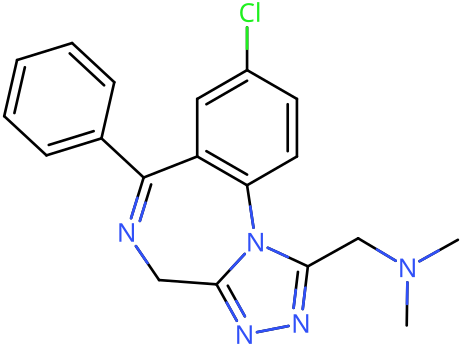
Adinazolam Stats & Data
CN(C)Cc1nnc2CN=C(c3ccccc3)c3cc(Cl)ccc3n12GJSLOMWRLALDCT-UHFFFAOYSA-NPharmacology
DrugBankDescription
Adinazolam (Deracyn®) is a benzodiazepine derivative with anxiolytic, anticonvulsant, sedative, and antidepressant properties. Adinazolam was first developed to enhance the antidepressant effects of alprazolam. It has never been approved by the FDA for clinical use.
Mechanism of Action
Adinazolam binds to peripheral-type benzodiazepine receptors which interact allosterically with GABA receptors. This potentiates the effects of the inhibitory neurotransmitter GABA, increasing the inhibition of the ascending reticular activating system and blocking the cortical and limbic arousal that occurs following stimulation of the reticular pathways.
Pharmacodynamics
Adinazolam is a benzodiazepine derivative used to treat anxiety, status epilepticus, and for sedation induction and anterograde amnesia. Adinazolam binds with high affinity to the GABA benzodiazepine receptor complex. Considerable evidence suggest that the central pharmacologic/therapeutic actions of alprazolam are mediated via interaction with this receptor complex.
Metabolism
The drug primarily undergoes hepatic metabolism to form the main metabolite N-desmethyladinazolam, alpha-hydroxyalprazolam, and estazolam.
Indication
For the treatment of anxiety and status epilepticus.
Receptor Profile
Receptor Actions
Toxicity
DrugBankToxicity (DrugBank)
Signs of overdose may include muscle weakness, ataxia, dysarthria and particularly in children paradoxical excitement. In more severe cases diminished reflexes, confusion, and coma may ensue.
Effect Profile
CuratedStrong anxiolysis with strong cognitive impairment, moderate euphoria, mild sedation
Tolerance & Pharmacokinetics
drugs.wikiNo tolerance chart. Our decay curves for these drugs were estimates, and a curve can make tolerance look longer-lasting than it is, which is the dangerous direction.
How fast tolerance to these drugs fades after a break has not been measured well enough to draw, so don't count on a dose you used to take still being safe: after time off, start with a much smaller amount and don't use alone. Mixing sedatives with each other, with alcohol or with opioids sharply raises the risk of a fatal overdose. If you've been using regularly, don't stop suddenly: withdrawal from benzodiazepines, alcohol or GHB/GBL can cause seizures or delirium, so get medical help to cut down gradually.
Sources: FRANK: benzodiazepines · Alcohol and Drug Foundation: GHB · FDA 2020: benzodiazepine boxed warning · FDA 2019: gabapentinoids and breathing · NHS: alcohol use disorder
Cross-Tolerances
Harm Reduction
drugs.wikiReasoning for additions and key harm-reduction points (with sources): 1) Classification and active metabolites: Adinazolam is a triazolobenzodiazepine that acts as a positive allosteric modulator at GABA-A; it forms active metabolites (notably N-desmethyladinazolam), which contribute to effects. This supports conservative dosing and awareness of prolonged sedation. Source: DrugBank DB00546 overview and metabolism citations. 2) Short parent half-life with active metabolite: In healthy subjects, adinazolam t1/2 is about 2.7 h on average; the active metabolite persists longer, so redosing to chase effects can lead to delayed over-sedation. Source: Cirrhotic vs. healthy PK study summary; elderly PK summary. 3) Special populations: Exposure increases in hepatic impairment and older adults (reduced clearance; longer half-life), necessitating lower starting doses and slower titration to avoid accumulation and falls. Source: PK studies above. 4) CYP3A4 substrate: Strong CYP3A4 inhibitors (e.g., azole antifungals, certain macrolides) can raise levels; inducers can lower them. Users on such medicines should reduce dose and avoid rapid redosing. Source: DrugBank lists adinazolam as a CYP3A4 substrate and enumerates interaction propensity. 5) Polydrug risks: Combining benzodiazepines with alcohol, opioids, or GHB/GBL markedly increases risk of respiratory depression and fatal overdose; tramadol is flagged specifically as dangerous in combination with benzos. Source: TripSit combination and HR pages; Erowid benzodiazepine/alprazolam pages. 6) Gabapentinoids and other sedatives: Additive CNS/respiratory depression when combined with benzos warrants avoidance or dose minimization and sitter/monitoring if prescribed together. Source: TripSit benzodiazepine HR. 7) Overdose management caveat: Flumazenil can precipitate acute withdrawal and seizures in benzodiazepine-dependent or mixed-overdose patients; airway/ventilation support is the priority. Source: NCBI StatPearls; Erowid alprazolam FAQ. 8) Withdrawal/tapering: Abrupt cessation after sustained use can be severe or life-threatening. A cautious taper (often 5–10% dose reductions every 1–2 weeks, individualized and often slower at low doses) is commonly advised by clinicians and communities; switching to a long-acting benzodiazepine is sometimes used. Source: Clinical caution in StatPearls (qualitative), community consensus examples on Bluelight; Erowid notes on severe withdrawal. 9) Measurement accuracy: Because many RC benzos are potent at low mg-levels, volumetric dosing in propylene glycol/ethanol and using an oral syringe reduces dosing errors. Source: TripSit benzodiazepines harm-reduction page. 10) Drug checking: Adinazolam appears on analyte lists for professional drug checking; where available, consider FTIR/GC-MS services for verification of contents and dose. Source: drugchecking.community guidance/coverage list. 11) Driving/operating machinery: Expect psychomotor and cognitive impairment (ataxia, reaction-time slowing); avoid driving until fully unimpaired (often the next day after higher doses). Source: NCBI StatPearls overview of benzodiazepine toxicity/impairment.
References
Data Sources
Cited References
- Amsterdam et al. 1986 - Adinazolam and imipramine in major depressive disorder
- Brogden RN et al. - Adinazolam review of pharmacology & therapeutic use
- Brunetti et al. 2021 - Designer Benzodiazepines: A Review of Toxicology and Public Health Risks
- DrugBank: Adinazolam
- Feighner JP et al. 1990 - Controlled trial of adinazolam vs desipramine in geriatric depression
- Moosmann et al. 2016 - Characterization and metabolism of designer benzodiazepines
- Pieters et al. 2021 - 'New/Designer Benzodiazepines': Analysis of Literature and Trip Reports
- Sethy et al. 1984 - Determination of biological activity of adinazolam and metabolites
- Tripsitter Adinazolam: A Powerful Benzodiazepine Known For Causing Mental Unpleasantness
- Venkatakrishnan et al. 1998 - Hepatic biotransformation of adinazolam and N-desmethyladinazolam
- TripSit: Factsheet – Adinazolam
- Schütz E. Pharmacokinetics of adinazolam in humans
- Feighner JP et al. Controlled trial of adinazolam vs desipramine in geriatric depression
- Psychotropics Database – Adinazolam monograph
- Reddit user reports compilation (search query: "Adinazolam experience")
Additional references
- DrugBank DB00546 – Adinazolam monograph (mechanism, CYP3A4 substrate, identifiers)
- DrugBank article – Determination of biological activity of adinazolam and its metabolites (active metabolites)
- Drugs-Forum study summary – Adinazolam PK in cirrhosis vs healthy
- Drugs-Forum study summary – Multiple-dose PK in elderly (performance decrements; longer t1/2)
- TripSit – Drug combinations (benzos with alcohol/opioids/GHB; tramadol flagged dangerous)
- TripSit – Benzodiazepines HR & dosing practices (volumetric dosing, mixing cautions)
- NCBI StatPearls – Benzodiazepines (toxicity, overdose management, flumazenil caution)
- Erowid – Alprazolam FAQ (flumazenil cautions; withdrawal risks)
- DrugChecking.community – On-site drug checking technologies (lists benzodiazepine-related analytes incl. adinazolam)
- Bluelight – Community taper guidance examples (anecdotal; 10% every 1–2 weeks)