
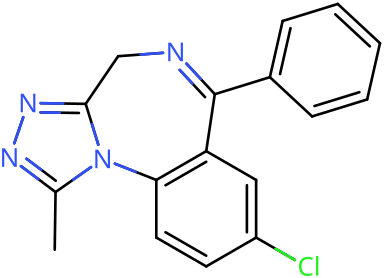
Alprazolam Stats & Data
VREFGVBLTWBCJP-UHFFFAOYSA-NInteraction Warnings
This combination can result in an increased risk of vomiting during unconsciousness and death from the resulting suffocation. If this occurs, users should attempt to fall asleep in the recovery position or have a friend move them into it.
It is dangerous to combine benzodiazepines with stimulants due to the risk of excessive intoxication. Stimulants decrease the sedative effect of benzodiazepines, which is the main factor most people consider when determining their level of intoxication. Once the stimulant wears off, the effects of benzodiazepines will be significantly increased, leading to intensified disinhibition as well as other effects.
Pharmacology
DrugBankDescription
Alprazolam is a triazolobenzodiazepine indicated for the treatment of anxiety and panic disorders. It is mainly metabolized by CYP3As and so is contraindicated with CYP3A inhibitors like ketoconazole and itraconazole. Benzodiazepine treatment should be stopped gradually by tapering down a patient's dose to avoid withdrawal symptoms. Alprazolam's adverse effects are generally related to the sedation it can cause. Alprazolam has been mixed with alcohol as a drug of abuse to potentiate the sedative effects of the drug which may lead to coma and death. Alprazolam was given FDA approval on October 16, 1981.
Mechanism of Action
Neurotransmission relies on excitatory and inhibitory signalling. γ-aminobutyric acid (GABA) type-A receptors (GABAARs) are members of the pentameric ligand-gated ion channel (PLGIC) superfamily located synaptically and perisynaptically to mediate phasic inhibition and extrasynaptically to mediate tonic inhibition. GABAARs comprise a variety of subunits from a homologous family whose members are named based on sequence identity as one of α1-6, β1-3, γ1-3, δ, ε, θ, π, and ρ1-3. Each subunit possesses an extracellular (ECD), transmembrane (TMD), and intracellular (ICD) domain; inter-subunit interfaces are the primary points of neurotransmitter and modulator binding, described by coordination of the principal (+) and complementary (-) sites in each subunit. Binding of GABA to GABAARs induces pore opening, rapid flow of chloride ions, and synaptic hyperpolarization, which in turn manifests as an inhibitory signal. The most prevalent GABAARs _in vivo_ are the α1β2γ2 receptors, which contain both GABA (β+/α-) and benzodiazepine (BZD, α+/γ-) binding sites in the intersubunit interfaces of the relevant subunits. In general, any receptors containing an αx/γz interface, where x = 1-3,5 and z = 1-3, have potential high-affinity BZD binding sites, although small sequence differences between subunits may alter binding affinity to individual molecules.
Pharmacodynamics
Alprazolam is a benzodiazepine that binds γ-aminobutyric acid (GABA) type-A receptors (GABAARs) to enhance their inhibitory effect on neurotransmission, specifically in the brain. Concomitant use with opioids may result in profound sedation, respiratory depression, coma, and death; patients taking benzodiazepines and opioids concurrently may require lower doses of one or both medications, depending on their clinical situation. Patients with pre-existing impaired respiratory function are at increased risk of adverse effects including death during treatment with benzodiazepines. In addition, due to its CNS depressant effects, patients taking alprazolam should avoid operating heavy machinery or driving and should avoid other CNS depressants such as alcohol. As with other benzodiazepines, alprazolam carries a risk of abuse, misuse, and addiction, which is higher in predisposed individuals and may require strict monitoring. Cessation of therapy may result in acute or protracted withdrawal symptoms, which may be life-threatening; the patient dose should be gradually tapered whenever discontinuation or reduced dosage are necessary. Newborns born to mothers using alprazolam later in pregnancy may suffer from sedation and withdrawal symptoms.
Metabolism
Alprazolam is metabolized to less effective metabolites by various CYPs including CYP3A4, CYP3A5, CYP3A7, and CYP2C9. The majority of alprazolam metabolism is mediated by hydroxylation via CYP3As. 4-hydroxyalprazolam has 20% the binding affinity of the parent drug, alpha-hydroxyalprazolam has 66% the affinity, and the benzophenone metabolite has <1% the affinity.
Absorption
Alprazolam administered orally is rapidly absorbed in the gastrointestinal tract, reaching Cmax in about 1.8 (1-2) hours. Absorption is high, resulting in an oral bioavailability of 84-91%. A 1 mg oral dose results in a Cmax of 12-22 μg/L. The extended-release formulation of alprazolam (XANAX XR) has similar absorption, bioavailability, and pharmacokinetics as the standard release, with the exception that the Tmax is ~10 hours compared to 1-2 hours. Temporal dosing alters these parameters, with Cmax increasing by 30% and Tmax decreasing by one hour when dosed at night as opposed to in the morning. Food has an effect on alprazolam absorption; a high-fat meal up to two hours before dosing increases the Cmax by ~25% and either a reduction (food consumed immediately prior to dosing) or increase (food consumed after dosing) of ~1/3 in Tmax. Neither the AUC nor half-life are appreciably affected by eating.
Indication
Alprazolam is indicated for the acute treatment of generalized anxiety disorder in adults. Alprazolam is also indicated, either as a standard or extended-release formulation, for the treatment of panic disorder with or without agoraphobia in adults. Alprazolam may also be prescribed off-label for insomnia, premenstrual syndrome, and depression.
Half-life
Alprazolam has a mean plasma elimination half-life of 11.2 hours in healthy patients (range 6.3-26.9 hours). The mean half-life is 16.3 hours (range 9.0-26.9 hours) in the elderly, 21.8 hours (range 9.9-40.4 hours) in obese patients, and 19.7 hours (range 5.8-65.3 hours) in patients with alcoholic liver disease. The half-life is 25% higher in Asian patients compared to Caucasians. Other studies have shown the half-life to be 9-16h. The extended-release formulation has a half-life of 10.7-15.8 hours in healthy adult patients.
Protein Binding
Alprazolam is ~80% protein-bound in serum. The majority of this protein binding is to serum albumin. Alprazolam is also bound to alpha1-acid glycoprotein with low frequency.
Elimination
Alprazolam is mainly eliminated in the urine. A large portion of the dose is eliminated as unmetabolized alprazolam. <10% of the dose is eliminated as alpha-hydroxy-alprazolam and 4-hydroxy-alprazolam.
Volume of Distribution
Alprazolam has a volume of distribution following oral administration of 0.8-1.3L/kg. Alprazolam crosses the blood-brain barrier.
Clearance
A 0.8 mg oral dose of alprazolam had a clearance of 0.90 ± 0.21 mL/min/kg, which increased to 2.13 ± 0.54 mL/min/kg when coadministered with the strong CYP3A4 inducer carbamazepine. Other studies have demonstrated a clearance of 0.70-1.5mL/min/kg.
Receptor Profile
Receptor Actions
Receptor Binding
Measured Affinities
Guide to PHARMACOLOGYMeasured binding and functional data for alprazolam, curated by the IUPHAR/BPS Guide to PHARMACOLOGY. Each row cites the paper it came from. Lower concentrations mean tighter binding — a value in the sub-nanomolar range indicates a very potent interaction.
| Target | Action | Measure | Value | Concentration | Species | Source |
|---|---|---|---|---|---|---|
| GABAA receptor α5 subunit GABRA5 | Positive | pEC50 | 8 | 10 nM | Human | PMID 12408715 |
| GABAA receptor α2 subunit GABRA2 | Positive | pEC50 | 7.92 | 12.02 nM | Human | PMID 12408715 |
| GABAA receptor α1 subunit GABRA1 | Positive | pEC50 | 7.43 | 37.15 nM | Human | PMID 12408715 |
| GABAA receptor α3 subunit GABRA3 | Positive | pEC50 | 7.16 | 69.18 nM | Human | PMID 12408715 |
Reading this. pKi, pEC50 and pIC50 are negative log molar values, so a higher number means a tighter interaction; the concentration column converts them for you. Values from non-human species are laboratory measurements and do not translate directly to human effect. Receptor affinity is not a dose — it describes what a molecule binds, not how much of it is safe to take.
Receptor data from the IUPHAR/BPS Guide to PHARMACOLOGY (v2026.2), licensed CC BY-SA 4.0. Matched to this substance by InChIKey.
History & Culture
1971–1981
Alprazolam was first synthesized in 1971 by J.B. Hester at the Upjohn Company, a pharmaceutical manufacturer that would later become part of Pfizer. The compound was developed as a triazolobenzodiazepine, featuring a triazole ring fused to the core benzodiazepine structure. Following its synthesis, alprazolam was patented in the United States in 1976. The drug received approval from the U.S. Food and Drug Administration on October 16, 1981, for the treatment of panic disorder and generalized anxiety disorder. It was subsequently marketed under the brand name Xanax in the United States, with various other brand names used internationally including Tafil, Kalma, Ksalol, and Niravam.
Alprazolam has become the most commonly prescribed and misused benzodiazepine in the United States. It has consistently ranked as the most prescribed psychiatric medication in the country, with prescriptions exceeding 40 million annually. This widespread medical use has contributed to its significant presence in both clinical and recreational contexts. The drug's high binding affinity, potency, and rapid onset of effects have contributed to its abuse potential. It has accumulated numerous street names reflecting its cultural prominence, including "Xannies," "Bars," "Z-bars," "Handlebars," and "Footballs," with the latter terms often referencing the shape of different tablet formulations.
Subjective Effects
Physical
The physical effects of alprazolam can be broken down into several components which progressively intensify proportional to dosage.
- Sedation: In terms of energy level alterations, this drug is extremely sedating and often results in an overwhelmingly lethargic state. At higher levels, this causes users to suddenly feel as if they are extremely sleep deprived and have not slept for days, forcing them to sit down and generally feel as if they are constantly on the verge of passing out instead of engaging in physical activities. This sense of sleep deprivation increases proportional to dosage and eventually becomes powerful enough to force a person into complete unconsciousness.
- Dizziness
- Muscle relaxation
- Physical euphoria
- Motor control loss
- Respiratory depression
- Seizure suppression
Cognitive
The cognitive effects of alprazolam can be broken down into several components which progressively intensify proportional to dosage. The general head space of alprazolam is described by many as one of intense sedation, relaxation, anxiety suppression and decreased inhibition. It contains a large number of typical depressant cognitive effects. Paradoxical reactions to benzodiazepines such as increased seizures (in epileptics), aggression, increased anxiety, violent behavior, loss of impulse control, irritability and suicidal behavior sometimes occur (although they are rare in the general population, with an incidence rate below 1%). These paradoxical effects occur with greater frequency in recreational abusers, individuals with mental disorders, children, and patients on high-dosage regimes.
- Amnesia
- Anxiety suppression
- Thought deceleration
- Disinhibition
- Information processing suppression
- Euphoria
- Compulsive redosing
- Delusions of sobriety: This is the false belief that one is perfectly sober despite obvious evidence to the contrary such as severe cognitive impairment and an inability to fully communicate with others.
Forked from Subjective Effect Documentation by Josie Kins, September 2015. Via dose.wiki (CC0).
Alprazolam has a low toxicity relative to dose. However, it is potentially lethal when mixed with depressants like alcohol, opioids, or barbiturates. Resulting in increased respiratory depression via a synergistic effect. It is strongly recommended that one use harm reduction practices when using this substance. The acute oral LD50 in rats is 331–2171 mg/kg.
LD50
LD50: 1020 mg/kg (Oral, mouse)
Carcinogenicity
No indication of carcinogenicity to humans (not listed by IARC).
Liver injury risk
Low concern (rare serious cases reported)
Addiction & dependence
Alprazolam is extremely physically and psychologically addictive. Tolerance will develop to the sedative-hypnotic effects within a couple of days of continuous use.
Effect Profile
Curated + 159 ReportsStrong anxiolysis with moderate sedation and cognitive impairment, low euphoria
User Experiences
Tolerance & Pharmacokinetics
drugs.wikiNo tolerance chart. Our decay curves for these drugs were estimates, and a curve can make tolerance look longer-lasting than it is, which is the dangerous direction.
How fast tolerance to these drugs fades after a break has not been measured well enough to draw, so don't count on a dose you used to take still being safe: after time off, start with a much smaller amount and don't use alone. Mixing sedatives with each other, with alcohol or with opioids sharply raises the risk of a fatal overdose. If you've been using regularly, don't stop suddenly: withdrawal from benzodiazepines, alcohol or GHB/GBL can cause seizures or delirium, so get medical help to cut down gradually.
Sources: FRANK: benzodiazepines · Alcohol and Drug Foundation: GHB · FDA 2020: benzodiazepine boxed warning · FDA 2019: gabapentinoids and breathing · NHS: alcohol use disorder
Demographics
Gender Distribution
Age Distribution
Reports Over Time
Effect Analysis
Erowid + BluelightEffects aggregated from 159 experience reports (113 single-substance Erowid + 46 Bluelight)
Effect Sentiment Distribution
Confidence Distribution
Each bar is the share of reports mentioning the effect; its whisker, and the band on the rows below, is the 95% interval: where the share could plausibly be with other reports of the same kind.
Positive Effects 35
Adverse Effects 45
Show 25 more adverse effects
Show 22 neutral or unclassified mentions
Also reported in combinations. In the 210 Alprazolam reports where another drug was taken too, 32 (15.2%) mention hospital, emergency services or an overdose, 7 (3.3%) a seizure and 8 (3.8%) psychosis. In the 113 single-substance reports: 14.2%, 7.1% and 1.8%. These are not in the figures above: they cannot be put down to Alprazolam alone, and a mention is not always something that happened to the writer.
Dose-Response Correlation
How effect frequency changes across dose levels. Whiskers, and the numbers' hover text, give each figure's 95% interval.
Not drawn, too few reports (a dose tier needs 20): Oral Common (n=11). Why 20?
View data table
| Effect | Heavy (n=40) |
|---|---|
| Sedation | 42.5% (95% interval 28 to 58 percent) |
| Memory Suppression | 30.0% (95% interval 18 to 45 percent) |
| Euphoria | 27.5% (95% interval 16 to 43 percent) |
| Confusion | 22.5% (95% interval 12 to 38 percent) |
| Motor Impairment | 22.5% (95% interval 12 to 38 percent) |
| Empathy | 17.5% (95% interval 9 to 32 percent) |
| Auditory Effects | 12.5% (95% interval 6 to 26 percent) |
| Color Enhancement | 12.5% (95% interval 6 to 26 percent) |
| Stimulation | 12.5% (95% interval 6 to 26 percent) |
| Hospital | 10.0% (95% interval 4 to 23 percent) |
| Pupil Dilation | 7.5% (95% interval 3 to 20 percent) |
| Visual Distortions | 5.0% (95% interval 1 to 16 percent) |
| Seizure | 5.0% (95% interval 1 to 16 percent) |
| Nausea | 5.0% (95% interval 1 to 16 percent) |
| Focus Enhancement | 5.0% (95% interval 1 to 16 percent) |
Subjective Effect Ontology
Experience ReportsStructured effect tags extracted from 369 Erowid & Bluelight experience reports using a controlled vocabulary of 220+ canonical effects across 15 domains.
Emotional
Motor
Dose–Effect Mapping
Experience ReportsHow reported effects shift across dose tiers, based on 113 single-substance experience reports. The shaded band on each bar is its 95% interval. An arrow (↑ ↓) marks a change between the lowest and highest tier that count an effect only when the gap is bigger than chance would explain; ~ means no clear change. How changes are called
Not drawn, too few reports (a dose tier needs 20): Oral Common (n=11). Why 20?
Limited tier coverage — most reports fall within the Heavy range. Effects at other dose levels may not be represented.
| Effect | Heavy (n=40) | Change with dose |
|---|---|---|
| sedation | ||
| memory suppression | ||
| euphoria | ||
| confusion | ||
| motor impairment | ||
| empathy | ||
| auditory effects | ||
| color enhancement | ||
| stimulation | ||
| hospital | ||
| pupil dilation | ||
| visual distortions | ||
| seizure | ||
| nausea | ||
| focus enhancement | ||
| closed-eye visuals | ||
| increased heart rate | ||
| body high | ||
| music enhancement |
Dosage Distribution
Dose distribution from experience reports, one dose per report (the first listed). Doses above Q3 + 3×IQR, far above what people typically take, are left out of the median and range and listed under each route: most are real heavy doses or overdoses, not mistakes.
Oral
9 reports gave a dose above the typical range (12–55 mg), so they are not in the figures above. 5 of them mention hospital, emergency services or an overdose. Listing a dose here does not mean it is safe.
Show the reports
- 55 mg · mentions hospital, emergency services or an overdose
- 40 mg · mentions hospital, emergency services or an overdose
- 26 mg · another drug taken too · mentions hospital, emergency services or an overdose
- 16 mg
- 16 mg · another drug taken too · mentions hospital, emergency services or an overdose
- 15 mg · another drug taken too
- 13 mg · mentions hospital, emergency services or an overdose
- 12.5 mg
- 12 mg
Insufflated
1 report gave a dose above the typical range (18 mg), so it is not in the figures above. Listing a dose here does not mean it is safe.
Show the report
- 18 mg · another drug taken too
Real-World Dose Distribution
ErowidFrom 602 of 670 recorded dose entries: those that state a weight (mg, g or µg), in routes with at least five of them. Values above Q3 + 3×IQR, far above what people typically take, are left out; they can include real heavy doses and overdoses, not only mistakes.
Oral (n=517)
Sublingual (n=7)
Insufflated (n=41)
Common Combinations
Most co-occurring substances, as a share of all 323 reports filed under Alprazolam; whiskers are 95% intervals
Form / Preparation
Most common forms and preparations, as a share of the 241 reports that give one; whiskers are 95% intervals
Body-Weight Dosing
Dose per kg of body weight, one dose per report (the first listed), from reports giving a weight of 30–250 kg. Doses above Q3 + 3×IQR, far above what people typically take, are left out of the median and range and listed under each route.
Oral
8 reports gave a dose above the typical range (0.156–1.122 mg/kg), so they are not in the figures above. 4 of them mention hospital, emergency services or an overdose. Listing a dose here does not mean it is safe.
Show the reports
- 1.122 mg/kg · mentions hospital, emergency services or an overdose
- 0.401 mg/kg · mentions hospital, emergency services or an overdose
- 0.37 mg/kg · another drug taken too · mentions hospital, emergency services or an overdose
- 0.219 mg/kg
- 0.206 mg/kg
- 0.176 mg/kg · another drug taken too · mentions hospital, emergency services or an overdose
- 0.165 mg/kg · another drug taken too
- 0.156 mg/kg
Insufflated
1 report gave a dose above the typical range (0.256 mg/kg), so it is not in the figures above. Listing a dose here does not mean it is safe.
Show the report
- 0.256 mg/kg · another drug taken too
Redose Patterns
Redosing behavior across 285 reports
Benzodiazepine Equivalence
Alprazolam - 0.5mg ~=10mg Diazepam.
Legal Status
| Country | Status | Notes |
|---|---|---|
| Australia | Schedule 8 | Originally classified as Schedule 4 (prescription only), alprazolam was rescheduled to Schedule 8 in January 2014, subjecting it to more rigorous prescribing requirements. Maximum in-house consumption is limited to 5 mg per day. |
| Austria | Prescription Only | Legal for medical use under the Arzneimittelgesetz (AMG). Possession or sale without a valid prescription is prohibited under the Suchtmittelgesetz (SMG). |
| Belgium | Prescription Only | Benzodiazepines including alprazolam are regulated as prescription medications under Belgian pharmaceutical law. |
| Canada | Schedule IV (CDSA) | Controlled under Schedule IV of the Controlled Drugs and Substances Act. Requires a valid prescription for lawful possession. |
| Czech Republic | Schedule IV (List 7) | Controlled substance under Nařízení vlády č. 463/2013 Sb. Available exclusively with a standard prescription (without blue stripe designation). |
| France | List I | Classified as a List I substance under French pharmaceutical law. Available only by prescription and illegal to purchase without one. |
| Germany | Anlage III BtMG | Controlled under Anlage III of the Betäubungsmittelgesetz (Narcotics Act) since August 1, 1986. Requires a narcotic prescription form, except for preparations containing up to 1 mg per dosage unit. Maximum of 50 dosage units may be dispensed together. |
| Ireland | Schedule 4 | Classified as a Schedule 4 controlled medicine. Requires a valid prescription for legal possession. |
| Italy | Schedule IV (Tabella 4) | Listed in Tabella 4 under the Testo unico sulla droga (D.P.R. 309/90). For medical prescriptions, falls under Pharmaceuticals section B and E. |
| Mexico | Schedule II | Classified as a Schedule II controlled substance requiring a prescription for legal acquisition. |
| Netherlands | List 2 (Opiumwet) | Controlled under List 2 of the Opium Law. Available for legitimate medical use with a valid prescription. |
| Russia | Schedule III | Classified as a Schedule III controlled substance since 2013. Requires prescription for legal possession. |
| South Africa | Schedule 5 | Listed as a Schedule 5 substance, making it available by prescription only. Marketed under the brand name Zopax. |
| Sweden | List IV (Schedule 4) | Regulated as a prescription medication under List IV of the Narcotics Drugs Act (Narkotikastrafflagen) of 1968. |
| Switzerland | Verzeichnis B | Specifically named as a controlled substance under Verzeichnis B of Swiss narcotics legislation. Available by prescription in 0.25, 0.5, 1, and 2 mg dose units. |
| Turkey | Green Prescription | Designated as a 'green prescription' medication, indicating stricter prescribing controls. Possession or sale without prescription is illegal. |
| United Kingdom | Class C (Schedule 4, Part I) | Classified as a Class C drug under the Misuse of Drugs Act 1971 and listed under Schedule 4, Part I (CD Benz POM) of the Misuse of Drugs Regulations 2001. Requires a valid prescription for lawful possession. Not available through the National Health Service. |
| United States | Schedule IV | Assigned to Schedule IV of the Controlled Substances Act by the Drug Enforcement Administration. Received FDA approval on October 16, 1981. Illegal to sell without a license and illegal to possess without a valid prescription. |
Harm Reduction
drugs.wikiDo not combine alprazolam with opioids, alcohol, or other sedatives; this combination greatly increases the risk of respiratory depression, coma, and death. A boxed warning applies to the class for opioid co‑use. Alprazolam is primarily metabolized by CYP3A; strong CYP3A4 inhibitors (e.g., ketoconazole, itraconazole, clarithromycin, nefazodone, fluvoxamine) and grapefruit can raise levels markedly; strong inducers (e.g., carbamazepine, phenytoin, rifampin, St. John’s wort) can lower levels and precipitate withdrawal or loss of effect. Street “Xanax” bars are frequently misrepresented; drug‑checking services have repeatedly found potent designer benzodiazepines (e.g., flualprazolam, norflurazepam) or other unexpected actives in tablets sold as alprazolam. Use professional drug checking where available and avoid assuming imprint/appearance equals identity. Do not stop suddenly after repeated dosing; benzodiazepine withdrawal can include seizures and delirium. Tapering should be gradual and medically supervised; flumazenil can precipitate acute withdrawal and seizures in dependent users and is generally avoided outside specific monitored indications. Alprazolam impairs attention, memory, and coordination; avoid driving or hazardous tasks while affected and after high or interacting doses. Avoid non‑oral routes: crushing tablets for injection/insufflation introduces fillers that can damage tissue and vasculature, and increases risk without added safety. Rapid onset and short/moderate duration encourage redosing and can accelerate tolerance; spacing use and conservative dosing reduce risk.
References
Data Sources
Cited References
Additional references
- DrugBank: Alprazolam (CYP3A substrate; interaction overview)
- DrugBank biointeractions: CYP3A substrates for Alprazolam
- Drugs‑Forum: Alprazolam pharmacokinetics & CYP3A4 inhibitor/inducer examples
- TripSit Wiki: Benzodiazepine equivalence (0.5 mg alprazolam ≈ 10 mg diazepam)
- Erowid Alprazolam FAQ (onset/peak/duration; brand names)
- EMCDDA (EUDA): Misuse of benzodiazepines among high‑risk opioid users (overdose risk with co‑use)
- saferparty.ch: XANAX warnings (flualprazolam/norflurazepam sold as alprazolam)
- saferparty.ch: Norflurazepam sold as XANAX (2025)
- saferparty.ch: Alprazolam mis‑sold (drug‑checking warning)
- DrugChecking.community (scope of analytes; benzos/opioids in checking programs)
- Erowid/DrugsData: lab drug‑checking program overview
- NCBI StatPearls: Flumazenil (seizure/withdrawal risk in benzodiazepine‑dependent patients)
- NCBI Bookshelf: Nursing Pharmacology chapter (benzodiazepines; opioid co‑use boxed warning; driving caution)
- DrugWise: Benzodiazepines (harm reduction; mixing risks; injection risks)