
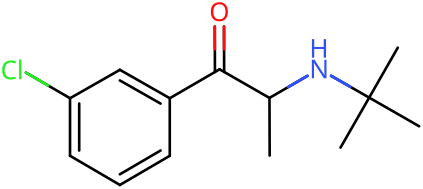
Bupropion Stats & Data
Clc1cccc(c1)C(=O)C(C)NC(C)(C)CSNPPWIUOZRMYNY-UHFFFAOYSA-NPharmacology
DrugBankDescription
Bupropion (also known as the brand name product Wellbutrin®) is a norepinephrine/dopamine-reuptake inhibitor (NDRI) used most commonly for the management of Major Depressive Disorder (MDD), Seasonal Affective Disorder (SAD), and as an aid for smoking cessation. Bupropion exerts its pharmacological effects by weakly inhibiting the enzymes involved in the uptake of the neurotransmitters norepinephrine and dopamine from the synaptic cleft, therefore prolonging their duration of action within the neuronal synapse and the downstream effects of these neurotransmitters. More specifically, bupropion binds to the norepinephrine transporter (NET) and the dopamine transporter (DAT). Bupropion was originally classified as an "atypical" antidepressant because it does not exert the same effects as the classical antidepressants such as Monoamine Oxidase Inhibitors (MAOIs), Tricyclic Antidepressants (TCAs), or Selective Serotonin Reuptake Inhibitors (SSRIs). While it has comparable effectiveness to typical first-line options for the treatment of depression such as SSRIs, bupropion is a unique option for the treatment of MDD as it lacks any clinically relevant serotonergic effects, typical of other mood medications, or any effects on histamine or adrenaline receptors.
Mechanism of Action
Bupropion is a norepinephrine/dopamine-reuptake inhibitor (NDRI) that exerts its pharmacological effects by weakly inhibiting the enzymes involved in the uptake of the neurotransmitters norepinephrine and dopamine from the synaptic cleft, therefore prolonging their duration of action within the neuronal synapse and the downstream effects of these neurotransmitters. More specifically, bupropion binds to the norepinephrine transporter (NET) and the dopamine transporter (DAT). Bupropion was originally classified as an "atypical" antidepressant because it does not exert the same effects as the classical antidepressants such as Monoamine Oxidase Inhibitors (MAOIs), Tricyclic Antidepressants (TCAs), or Selective Serotonin Reuptake Inhibitors (SSRIs). While it has comparable effectiveness to typical first-line options for the treatment of depression such as SSRIs, bupropion is a unique option for the treatment of MDD as it lacks any clinically relevant serotonergic effects, typical of other mood medications, or any effects on histamine or adrenaline receptors. Lack of activity at these receptors results in a more tolerable side effect profile; bupropion is less likely to cause sexual side effects, sedation, or weight gain as compared to SSRIs or TCAs, for example.
Pharmacodynamics
Bupropion is chemically unrelated to tricyclic, tetracyclic, selective serotonin re-uptake inhibitors, or other known antidepressant agents. Compared to classical tricyclic antidepressants, Bupropion is a relatively weak inhibitor of the neuronal uptake of norepinephrine and dopamine. In addition, Bupropion does not inhibit monoamine oxidase. Bupropion has been found to be essentially inactive at the serotonin transporter (SERT)(IC50 >10 000 nM), however both bupropion and its primary metabolite hydroxybupropion have been found to block the function of cation-selective serotonin type 3A receptors (5-HT3ARs). Bupropion produces dose-related central nervous system (CNS) stimulant effects in animals, as evidenced by increased locomotor activity, increased rates of responding in various schedule-controlled operant behaviour tasks, and, at high doses, induction of mild stereotyped behaviour . Due to these stimulant effects and selective activity at dopamine and norepinephrine receptors, bupropion has been identified as having an abuse potential.FDA Label,A178846 Bupropion has a similar structure to the controlled substance DB01560, and has been identified as having mild amphetamine-like activity, particularly when inhaled or injected. Bupropion is also known to lower the seizure threshold, making any pre-existing seizure conditions a contraindication to its use.
Metabolism
Bupropion is extensively metabolized in humans. Three metabolites are active: hydroxybupropion, which is formed via hydroxylation of the tert-butyl group of bupropion, and the amino-alcohol isomers, threohydrobupropion and erythrohydrobupropion, which are formed via reduction of the carbonyl group. In vitro findings suggest that CYP2B6 is the principal isoenzyme involved in the formation of hydroxybupropion, while cytochrome P450 enzymes are not involved in the formation of threohydrobupropion. Hydroxybupropion has been shown to have the same affinity as bupropion for the norepinephrine transporter (NET) but approximately 50% of its antidepressant activity despite reaching concentrations of ~10-fold higher than that of the parent drug. Oxidation of the bupropion side chain results in the formation of a glycine conjugate of meta-chlorobenzoic acid, which is then excreted as the major urinary metabolite. The potency and toxicity of the metabolites relative to bupropion have not been fully characterized. However, it has been demonstrated in an antidepressant screening test in mice that hydroxybupropion is one-half as potent as bupropion, while threohydrobupropion and erythrohydrobupropion are 5-fold less potent than bupropion. This may be of clinical importance because the plasma concentrations of the metabolites are as high as or higher than those of bupropion.
Absorption
Bupropion is currently available in 3 distinct, but bioequivalent formulations: immediate release (IR), sustained-release (SR), and extended-release (XL). **Immediate Release Formulation** In humans, following oral administration of bupropion hydrochloride tablets, peak plasma bupropion concentrations are usually achieved within 2 hours. IR formulations provide a short duration of action and are therefore generally dosed three times per day. **Sustained Release Formulation** In humans, following oral administration of bupropion hydrochloride sustained-release tablets (SR), peak plasma concentration (Cmax) of bupropion is usually achieved within 3 hours. SR formulations provide a 12-hour extended release of medication and are therefore generally dosed twice per day. **Extended Release Formulation** Following single oral administration of bupropion hydrochloride extended-release tablets (XL) to healthy volunteers, the median time to peak plasma concentrations for bupropion was approximately 5 hours. The presence of food did not affect the peak concentration or area under the curve of bupropion.
Indication
Bupropion is indicated for the treatment of major depressive disorder (MDD), seasonal affective disorder (SAD), and as an aid to smoking cessation. When used in combination with naltrexone as the marketed product ContraveⓇ, bupropion is indicated as an adjunct to a reduced-calorie diet and increased physical activity for chronic weight management in adults with an initial body mass index (BMI) of: 30 kg/m^2 or greater (obese) or 27 kg/m^2 or greater (overweight) in the presence of at least one weight-related comorbid condition (e.g., hypertension, type 2 diabetes mellitus, or dyslipidemia). Bupropion is also used off-label as a first-line treatment in patients with ADHD and comorbid bipolar disorder when used as an adjunct to mood stabilizers.
Protein Binding
In vitro tests show that bupropion is 84% bound to human plasma proteins at concentrations up to 200 mcg per mL. The extent of protein binding of the hydroxybupropion metabolite is similar to that for bupropion, whereas the extent of protein binding of the threohydrobupropion metabolite is about half that seen with bupropion.
Elimination
Bupropion is extensively metabolized in humans. Oxidation of the bupropion side chain results in the formation of a glycine conjugate of metachlorobenzoic acid, which is then excreted as the major urinary metabolite. Following oral administration of 200 mg of 14C-bupropion in humans, 87% and 10% of the radioactive dose were recovered in the urine and feces, respectively. However, the fraction of the oral dose of bupropion excreted unchanged was only 0.5%, a finding consistent with the extensive metabolism of bupropion.
Receptor Profile
Receptor Actions
Receptor Binding
Measured Affinities
Guide to PHARMACOLOGYMeasured binding and functional data for bupropion, curated by the IUPHAR/BPS Guide to PHARMACOLOGY. Each row cites the paper it came from. Lower concentrations mean tighter binding — a value in the sub-nanomolar range indicates a very potent interaction.
| Target | Action | Measure | Value | Concentration | Species | Source |
|---|---|---|---|---|---|---|
| NET SLC6A2 | Inhibition | pKi | 6.36 | 436.52 nM | Human | PMID 19442525 |
| DAT SLC6A3 | Inhibition | pIC50 | 6.35 | 446.68 nM | Human | PMID 19821577 |
Reading this. pKi, pEC50 and pIC50 are negative log molar values, so a higher number means a tighter interaction; the concentration column converts them for you. Values from non-human species are laboratory measurements and do not translate directly to human effect. Receptor affinity is not a dose — it describes what a molecule binds, not how much of it is safe to take.
Receptor data from the IUPHAR/BPS Guide to PHARMACOLOGY (v2026.2), licensed CC BY-SA 4.0. Matched to this substance by InChIKey.
Bupropion is an antidepressant commonly prescribed as a smoking cessation aid. It has effects on dopamine and norepinephrine, and can lower seizure threshold, particularly in overdose. Signs and Symptoms of Overdose There is extensive published data regarding bupropion overdose. The more severe exposures typically occur in an intentional overdose setting.
Carcinogenicity
No indication of carcinogenicity to humans (not listed by IARC).
Liver injury risk
Low concern (rare serious cases reported)
Toxicity (DrugBank)
Symptoms of overdose include seizures, hallucinations, loss of consciousness, tachycardia, and cardiac arrest.
Effect Profile
Curated + 67 ReportsStrong stimulation with strong anxiety/jitters, moderate euphoria, mild focus
Tolerance & Pharmacokinetics
drugs.wikiTolerance Decay
Experience Report Analysis
ErowidDemographics
Gender Distribution
Age Distribution
Reports Over Time
Effect Analysis
ErowidEffects aggregated from 67 experience reports (67 single-substance Erowid)
Effect Sentiment Distribution
Confidence Distribution
Each bar is the share of reports mentioning the effect; its whisker, and the band on the rows below, is the 95% interval: where the share could plausibly be with other reports of the same kind.
Positive Effects 8
Adverse Effects 10
Show 6 neutral or unclassified mentions
Also reported in combinations. In the 111 Bupropion reports where another drug was taken too, 21 (18.9%) mention hospital, emergency services or an overdose, 12 (10.8%) a seizure and 8 (7.2%) psychosis. In the 67 single-substance reports: 19.4%, 19.4% and 4.5%. These are not in the figures above: they cannot be put down to Bupropion alone, and a mention is not always something that happened to the writer.
Dose-Response Correlation
How effect frequency changes across dose levels. Whiskers, and the numbers' hover text, give each figure's 95% interval.
Not drawn, too few reports (a dose tier needs 20): Oral Common (n=11), Oral Strong (n=12), Oral Heavy (n=15). Why 20?
Dosage Distribution
Dose distribution from experience reports, one dose per report (the first listed). Doses above Q3 + 3×IQR, far above what people typically take, are left out of the median and range and listed under each route: most are real heavy doses or overdoses, not mistakes.
Oral
8 reports gave a dose above the typical range (1,200–9,000 mg), so they are not in the figures above. 3 of them mention hospital, emergency services or an overdose. Listing a dose here does not mean it is safe.
Show the reports
Real-World Dose Distribution
ErowidFrom 303 of 321 recorded dose entries: those that state a weight (mg, g or µg), in routes with at least five of them. Values above Q3 + 3×IQR, far above what people typically take, are left out; they can include real heavy doses and overdoses, not only mistakes.
Oral (n=247)
Insufflated (n=38)
Common Combinations
Most co-occurring substances, as a share of all 178 reports filed under Bupropion; whiskers are 95% intervals
Form / Preparation
Most common forms and preparations, as a share of the 73 reports that give one; whiskers are 95% intervals
Body-Weight Dosing
Dose per kg of body weight, one dose per report (the first listed), from reports giving a weight of 30–250 kg. Doses above Q3 + 3×IQR, far above what people typically take, are left out of the median and range and listed under each route.
Oral
10 reports gave a dose above the typical range (17.647–132.353 mg/kg), so they are not in the figures above. 3 of them mention hospital, emergency services or an overdose. Listing a dose here does not mean it is safe.
Show the reports
- 132.353 mg/kg
- 52.941 mg/kg · mentions hospital, emergency services or an overdose
- 49.02 mg/kg · another drug taken too · mentions hospital, emergency services or an overdose
- 42.52 mg/kg
- 40.107 mg/kg
- 23.864 mg/kg · another drug taken too
- 22.388 mg/kg · mentions hospital, emergency services or an overdose
- 19.846 mg/kg
- 18.036 mg/kg
- 17.647 mg/kg · another drug taken too
Insufflated
2 reports gave a dose above the typical range (10.169–35.294 mg/kg), so they are not in the figures above. Listing a dose here does not mean it is safe.
Show the reports
- 35.294 mg/kg
- 10.169 mg/kg · another drug taken too
Redose Patterns
Redosing behavior across 160 reports
Legal Status
| Country | Status | Notes |
|---|---|---|
| Russia | banned as a narcotic drug, due to it being a derivative of methcathinone | |
| United States | Unscheduled, though it’s only available with a prescription. |
References
Data Sources
Cited References
- Arias et al. 2009: Bupropion interaction with nicotinic receptors
- Erowid: Bupropion Vault
- PsychonautWiki: Bupropion (Talk page)
- Slemmer et al. 2000: Bupropion is a nicotinic antagonist
- TripSit Factsheet: Bupropion
- DrugBank: Bupropion category
- DrugBank: Bupropion as NDRI
- DrugBank: Bupropion and serotonin 3A receptors