
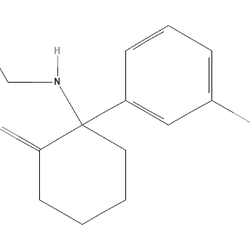
FXE Stats & Data
FCETYWCLCUZFJI-UHFFFAOYSA-NToxicity
PsychonautWiki===Dangerous interactions=== Warning: Many psychoactive substances that are reasonably safe to use on their own can suddenly become dangerous and even life-threatening when combined with certain other substances. The following list provides some known dangerous interactions (although it is not guaranteed to include all of them). Always conduct independent research (e.g. Google, DuckDuckGo, PubMed) to ensure that a combination of two or more substances is safe to consume. Some of the listed interactions have been sourced from TripSit.
Effect Profile
Curated + 3 ReportsStrong dissociative depth with strong motor impairment, mild mania, low insight
Tolerance & Pharmacokinetics
drugs.wikiTolerance Decay
Estimates are based on dissociative class patterns and user reports rather than controlled studies. Cross‑tolerance within arylcyclohexylamines is common; allowing 2–4+ weeks between sessions reduces tolerance significantly.
Cross-Tolerances
Experience Report Analysis
ErowidDemographics
Gender Distribution
Too few reports for a chart: gender is known from 7 reports, and a split is drawn only from 20 reports or more. Counts are shown instead. Why 20?
- Not Specified 2 of 7
- Male 4 of 7
- Female 1 of 7
Age Distribution
Reports Over Time
Effect Analysis
ErowidEffects aggregated from 3 experience reports (3 single-substance Erowid)
Effect Sentiment Distribution
Confidence Distribution
Each bar is the share of reports mentioning the effect; its whisker, and the band on the rows below, is the 95% interval: where the share could plausibly be with other reports of the same kind.
Too few reports for bars: these effects come from 3 single-substance Erowid reports, and a bar is drawn only from 20 reports or more. With fewer, a percentage cannot tell a common effect from a rare one. Counts are shown instead. Why 20?
Positive Effects 0
Adverse Effects 0
Show 1 neutral or unclassified mention
Real-World Dose Distribution
ErowidFrom 8 of 8 recorded dose entries: those that state a weight (mg, g or µg), in routes with at least five of them. Values above Q3 + 3×IQR, far above what people typically take, are left out; they can include real heavy doses and overdoses, not only mistakes.
Insufflated (n=8)
Form / Preparation
Most common forms and preparations, as a share of the 7 reports that give one
Too few reports for bars: these forms come from 7 reports, and a bar is drawn only from 20 reports or more. With fewer, a percentage cannot tell a common effect from a rare one. Counts are shown instead. Why 20?
- Powder / Crystals 5 of 7
- Ground / Crushed 2 of 7
Harm Reduction
drugs.wiki- Identity and purity vary in the unregulated market; drug checking is strongly recommended. Toronto’s Drug Checking Service and similar services often detect unexpected actives in samples; start with an allergy dose and avoid unknown vendors.
- Combining dissociatives with CNS depressants (alcohol, benzos, opioids, GHB/GBL) greatly increases risks of blackout, airway compromise, and respiratory depression; place anyone unconscious in the recovery position and call emergency services.
- Frequent/heavy arylcyclohexylamine use is linked to ulcerative cystitis and other urinary tract injury (data strongest for ketamine). Given structural similarity and user reports, apply the same precautions to FXE: minimize frequency, stay well‑hydrated during/after use, and stop if urinary pain/urgency/hematuria emerge.
- Dissociatives can impair coordination and judgment; sit or lie down during peaks, avoid heights/water, and strictly avoid driving/operating machinery until fully baseline the next day. Ketamine references note sedation and slowed breathing at high doses—caution is extrapolated to FXE.
- High or prolonged dissociative intoxication can precipitate rhabdomyolysis; seek urgent care if you develop severe muscle pain, dark (tea‑colored) urine, or decreased urination after a session.
- Insufflation irritates nasal mucosa and encourages redosing. To reduce harm: use separate, clean straws; rotate nostrils; space sessions; and gently rinse with sterile saline 15–30 minutes post‑use. General community HR guidance supports nasal care.
- Intramuscular use has appeared in community reports but carries additional risks (infection, dosing errors). If someone chooses IM, sterile technique, micron filtration, and accurate volumetric dosing are essential; this is not recommended for novices.
- Tolerance to dissociatives builds rapidly; even weekly use can markedly blunt effects, encouraging escalation. Long breaks (2–4+ weeks) help reset tolerance.
- FXE is often described as ketamine‑like with unique nuances; individuals vary widely in sensitivity. Dose conservatively, especially if on serotonergic meds (limited human interaction data for FXE; MXE showed SRI activity).
- Because FXE is sold as a research chemical, mislabeling/adulteration occur. Visually atypical powders and unexpected effects warrant immediate cessation and testing; some user reports describe anomalous batches.
References
Cited references
- Bluelight Big & Dandy Fluorexetamine (FXE) Thread (multiple pages)
- Reddit r/researchchemicals: FXE dosing/duration anecdotes
- TripSit: Drug combinations chart
- TripSit: Dissociatives overview (risks including rhabdomyolysis)
- NCBI Bookshelf: Ketamine—short/long‑term effects table
- DrugWise: Ketamine (harms including bladder)
- Hi‑Ground: Ketamine factsheet (HR tips, combinations)
- Drug Checking Community (Toronto): Service info (why check drugs)
- Reddit r/dissociatives: Atypical FXE batch warning
- Bluelight: General dissociative HR (Biology/Pharmacology & Drugs 101)