
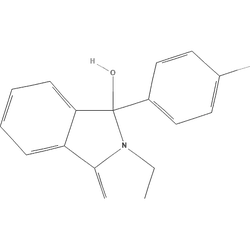
Mazindol Stats & Data
Clc1ccc(cc1)C1(O)c2ccccc2C2=NCCN12ZPXSCAKFGYXMGA-UHFFFAOYSA-NPharmacology
DrugBankDescription
Mazindol is a tricyclic anorexigenic agent that is unrelated to and less toxic than amphetamine, but with some similar side effects. It inhibits uptake of catecholamines and blocks the binding of cocaine to the dopamine uptake transporter. Mazindol is only approved in the United States for the treatment of Duchenne muscular dystrophy, and is not marketed or available in the United States for use in the treatment of obesity.
Mechanism of Action
Unlike other sympathomimetic appetite suppressants such as phentermine, mazindol is thought to inhibit the reuptake of norepinephrine rather than to cause its release.
Pharmacodynamics
Mazindol is a sympathomimetic amine that stimulates the central nervous system (nerves and brain), leading to increased your heart rate and blood pressure, and decreased appetite. Since the appetite-suppressing effect of the drug tends to decrease after few weeks of treatment, sympathomimetic appetite suppressants are typically used short-term weight-loss program.
Indication
Used in short-term (a few weeks) treatment of exogenous obesity in conjunction with a regimen of weight reduction based on caloric restriction, exercise, and behavior modification in patients with a body mass index of 30 kg of body weight per height in meters squared (kg/m2) or in patients with a body mass index of 27 kg/m2 in the presence of risk factors such as hypertension, diabetes, or hyperlipidemia.
Measured Affinities
Guide to PHARMACOLOGYMeasured binding and functional data for mazindol, curated by the IUPHAR/BPS Guide to PHARMACOLOGY. Each row cites the paper it came from. Lower concentrations mean tighter binding — a value in the sub-nanomolar range indicates a very potent interaction.
| Target | Action | Measure | Value | Concentration | Species | Source |
|---|---|---|---|---|---|---|
| NET SLC6A2 | Inhibition | pKi | 8.9 | 1.26 nM | Human | — |
| DAT SLC6A3 | Inhibition | pKi | 8 | 10 nM | Human | — |
Reading this. pKi, pEC50 and pIC50 are negative log molar values, so a higher number means a tighter interaction; the concentration column converts them for you. Values from non-human species are laboratory measurements and do not translate directly to human effect. Receptor affinity is not a dose — it describes what a molecule binds, not how much of it is safe to take.
Receptor data from the IUPHAR/BPS Guide to PHARMACOLOGY (v2026.2), licensed CC BY-SA 4.0. Matched to this substance by InChIKey.
Although the mechanism of action of the sympathomimetics in the treatment of obesity is not fully known, these medications have pharmacological effects similar to those of amphetamines. Unlike other sympathomimetic appetite suppressants such as phentermine, mazindol is thought to inhibit the reuptake of norepinephrine rather than to cause its release.
Carcinogenicity
No indication of carcinogenicity to humans (not listed by IARC).
Toxicity (DrugBank)
Symptoms of mazindol overdose may be associated with restlessness, tremor, rapid breathing, confusion, hallucinations, panic, aggressiveness, nausea, vomiting, diarrhea, an irregular heartbeat, and seizures.
Health effects (PubChem excerpts)
Using large amounts of these drugs can result in a condition known as amphetamine psychosis -- which can result in auditory, visual and tactile hallucinations, intense paranoia, irrational thoughts and beliefs, delusions, and mental confusion.
Effect Profile
CuratedModerate euphoria with strong anxiety/jitters, mild focus, low stimulation
Tolerance & Pharmacokinetics
drugs.wikiTolerance Decay
Tolerance appears to build over 1–2 weeks of daily use and decays over 1–2 weeks of abstinence, consistent with other therapeutic stimulants; data quality is limited and largely extrapolated from clinical practice and user reports rather than controlled trials.
Cross-Tolerances
Harm Reduction
drugs.wikiMechanism: primarily inhibits norepinephrine and dopamine transporters; much weaker serotonin effects relative to NET/DAT, which guides interaction risk (e.g., less serotonergic liability than amphetamines). Start with the low end of dosing, particularly in stimulant-naïve users, and avoid redosing because the 10–13 h half-life produces prolonged cardiovascular stimulation. Baseline and on-day checks of blood pressure and heart rate reduce risk; discontinue and seek care with chest pain, severe headache, shortness of breath, or palpitations. Avoid use with MAOIs or within 14 days of MAOI exposure due to risk of hypertensive crisis; this is a general rule for sympathomimetics. Avoid combining with other stimulants (including OTC decongestants) to limit additive tachycardia and hypertension. In those on SNRIs or other noradrenergic agents (atomoxetine, bupropion, many TCAs), additive increases in BP/HR and anxiety are more likely; if co-prescribed medically, dose conservatively and monitor vitals. For SSRI users, serotonin toxicity risk appears lower than with serotonergic stimulants, but agitation, anxiety, and insomnia may be amplified—treat as a caution combination. Dose early in the day; avoid late-afternoon/evening dosing to minimize sleep disruption. Take with or without food; taking 1 hour before meals is common in labels, and food may reduce GI upset. Hepatic metabolism suggests added caution with significant liver disease. Typical adverse effects include insomnia, dry mouth, palpitations, anxiety, and decreased appetite; severe events are uncommon at therapeutic doses but have included arrhythmias in isolated cases. Stay hydrated and maintain nutrition given strong appetite suppression; prolonged caloric deficit can worsen side effects.
References
Cited references
- DrugBank: Mazindol monograph (mechanism, half-life, brands, food info, toxicity)
- DrugBank article summary of Tatsumi et al., 1997 (high NET/DAT potency)
- PubMed: Mazindol long-term chart review in narcolepsy/hypersomnia (adverse effects include palpitations, BP/HR monitoring)
- PubMed: Therapeutic effects of mazindol in narcolepsy (dosing range, insomnia reports)
- NCBI Bookshelf: MAO Inhibitors (contraindication with sympathomimetics; hypertensive crisis risk)
- TripSit: Drug combinations wiki/chart (general stimulant–stimulant and stimulant–alcohol cautions)
- NCBI Bookshelf: Atomoxetine (NET inhibitor; raises BP/HR; supports caution with other noradrenergics)
- PubChem bioassays using [3H]mazindol at DAT (assay context and historic binding utility)