
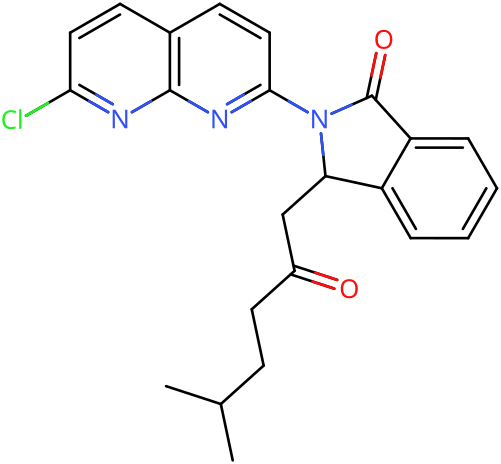
Pagoclone Stats & Data
CC(C)CCC(=O)CC1c2ccccc2C(=O)N1c1ccc2ccc(Cl)nc2n1HIUPRQPBWVEQJJ-IBGZPJMESA-NPharmacology
DrugBankDescription
Pagoclone is an anxiolytic drug from the cyclopyrrolone family, which is related to other more well known drugs such as the sleeping medication zopiclone. It is one of a relatively recently developed class of medicines known as the nonbenzodiazepines, which have similar effects to the older benzodiazepine group, but with quite different chemical structures.
Mechanism of Action
Pagoclone is a subtype-selective drug which binds primarily to the alpha2/alpha3 subtypes of the GABAA receptor which are responsible for the anti-anxiety effects of these kind of drugs, but has relatively little efficacy at the alpha1 subtype which produces the sedative and memory loss effects.
Pharmacodynamics
Pagoclone was originally developed as an anti-anxiety drug, but never commercialised. It is a partial agonist acting at GABAA receptors in the brain. In contrast to zopiclone, pagoclone produces anxiolytic effects with little or no sedative or amnestic actions at low doses.
Indication
For the potential treatment of panic and anxiety disorders.
Tolerance & Pharmacokinetics
drugs.wikiNo tolerance chart. Our decay curves for these drugs were estimates, and a curve can make tolerance look longer-lasting than it is, which is the dangerous direction.
How fast tolerance to these drugs fades after a break has not been measured well enough to draw, so don't count on a dose you used to take still being safe: after time off, start with a much smaller amount and don't use alone. Mixing sedatives with each other, with alcohol or with opioids sharply raises the risk of a fatal overdose. If you've been using regularly, don't stop suddenly: withdrawal from benzodiazepines, alcohol or GHB/GBL can cause seizures or delirium, so get medical help to cut down gradually.
Sources: FRANK: benzodiazepines · Alcohol and Drug Foundation: GHB · FDA 2020: benzodiazepine boxed warning · FDA 2019: gabapentinoids and breathing · NHS: alcohol use disorder