
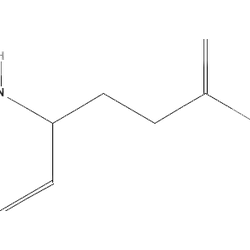
Vigabatrin Stats & Data
PJDFLNIOAUIZSL-UHFFFAOYSA-NPharmacology
DrugBankDescription
Vigabatrin is an analog of gamma-aminobutyric acid (GABA), the main inhibitory neurotransmitter in the central nervous system, used in the treatment of refractory seizures and infantile spasms. It irreversibly inhibits the enzyme responsible for GABA metabolism, thereby increasing levels of circulating GABA. Although administered as a racemic mixture, only the S(+) enantiomer is pharmacologically active. It was first introduced as an antiepileptic agent in the United Kingdom in 1989 and was used extensively until 1997, when an association with vision loss became apparent. Its use is now generally reserved for patients who have failed alternative therapies, and its US approval by the FDA in 2009 mandated the creation of a drug registry to monitor patients for visual deficits.
Mechanism of Action
Gamma-aminobutyric acid (GABA) is the major inhibitory transmitter throughout the central nervous system, and the potentiation of GABAergic neurotransmission is therefore a crucial mechanism through which antiepileptic agents may combat the pathologic excitatory neurotransmission seen in epilepsy. Vigabatrin increases concentrations of GABA in the central nervous system by irreversibly inhibiting the enzymes responsible for its metabolism to succinic semialdehyde: gamma-aminobutyric acid transaminase (GABA-T).
Pharmacodynamics
Vigabatrin is an antiepileptic agent chemically unrelated to other anticonvulsants. Vigabatrin prevents the metabolism of GABA by irreversibly inhibiting GABA transaminase (GABA-T). As vigabatrin is an irreversible inhibitor of gamma-aminobutyric acid transaminase (GABA-T), its duration of effect is thought to be dependent on the rate of GABA-T re-synthesis rather than on the rate of drug elimination.
Metabolism
Vigabatrin is not metabolized to any significant extent.
Absorption
Absorption following oral administration is essentially complete. The Tmax is approximately 2.5 hours in infants (5m - 2y) and 1 hour in all other age groups.
Indication
Vigabatrin is indicated as adjunctive therapy in the treatment of refractory complex partial seizures in patients 2 years of age and older who have had inadequate responses to multiple previous treatments (i.e. not to be used for first-line therapy). It is also indicated as monotherapy in the treatment of infantile spasms in patients between 1 month and 2 years of age for whom the potential benefits outweigh the risk of vision loss.
Half-life
The terminal half-life of vigabatrin is approximately 5.7 hours for infants (5m - 2y), 6.8 hours for children (3y - 9y), 9.5 hours for adolescents (10y - 16y), and 10.5 h for adults.
Protein Binding
Vigabatrin does not bind to plasma proteins.
Elimination
Approximately 95% of the drug is eliminated in the urine within 72 hours of administration, of which ~80% is unchanged parent drug.
Volume of Distribution
Vigabatrin is widely distributed throughout the body with a mean steady-state volume of distribution of 1.1 L/kg.
Clearance
The oral clearance of vigabatrin is 2.4 L/h for infants (5m - 2y), 5.1 L/h for children (3y - 9y), 5.8 L/h for adolescents (10y - 16y), and 7 L/h for adults.
Measured Affinities
Guide to PHARMACOLOGYMeasured binding and functional data for vigabatrin, curated by the IUPHAR/BPS Guide to PHARMACOLOGY. Each row cites the paper it came from. Lower concentrations mean tighter binding — a value in the sub-nanomolar range indicates a very potent interaction.
| Target | Action | Measure | Value | Concentration | Species | Source |
|---|---|---|---|---|---|---|
| 4-aminobutyrate aminotransferase ABAT | Irreversible inhibition | pKi | 3.07 | 851,138 nM | Human | — |
| Vesicular inhibitory amino acid transporter SLC32A1 | Inhibition | pIC50 | 2.1 | 7,943,282 nM | Human | PMID 9349821 |
Reading this. pKi, pEC50 and pIC50 are negative log molar values, so a higher number means a tighter interaction; the concentration column converts them for you. Values from non-human species are laboratory measurements and do not translate directly to human effect. Receptor affinity is not a dose — it describes what a molecule binds, not how much of it is safe to take.
Receptor data from the IUPHAR/BPS Guide to PHARMACOLOGY (v2026.2), licensed CC BY-SA 4.0. Matched to this substance by InChIKey.
Visual field defects, including permanent vision loss, have been reported in infants, children, and adults receiving vigabatrin. Based on clinical studies in adults, bilateral concentric visual field constriction ranging in severity from mild to severe may occur in 30% or more of patients receiving the drug. Signs and Symptoms of Overdose Vigabatrin toxicity typically develops gradually as a result of prolonged treatment. One case of acute toxicity involved a 25-year-old patient who attempted suicide by consuming 120 vigabatrin tablets (500 mg each).
LD50
LD50, oral, rat: 3000 mg/kg
Carcinogenicity
No indication of carcinogenicity to humans (not listed by IARC).
Liver injury risk
Ambiguous (limited data)
Health effects (PubChem excerpts)
May cause a potentially dangerous rash that may develop into Stevens Johnson syndrome, an extremely rare but potentially fatal skin disease.