
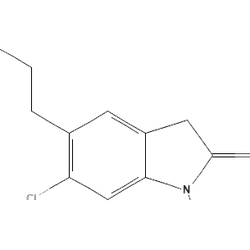
Ziprasidone Stats & Data
O=C1Cc2cc(CCN3CCN(CC3)c3nsc4ccccc34)c(Cl)cc2N1MVWVFYHBGMAFLY-UHFFFAOYSA-NPharmacology
DrugBankDescription
Disorders such as schizophrenia and bipolar disorder can significantly impair mood, cognition, and behavior. These mental illnesses can often be accompanied by comorbidities such as depression and substance abuse, and can significantly impact the quality of life of patients and caregivers. Luckily, several treatment options for psychotic disorders have been introduced to market since the realization of chlorpromazine's antipsychotic properties in 1952. Second generation antipsychotics (commonly referred to as atypical antipsychotics) include clozapine, quetiapine, olanzapine, aripiprazole and ziprasidone among others, and are generally thought to be as efficacious as first generation antipsychotics but differ in their adverse effect profiles. First generation antipsychotics are associated with extrapyramidal adverse effects while atypical antipsychotics are linked to weight gain, impaired glucose tolerance and metabolic syndrome. Ziprasidone is used to treat schizophrenia and bipolar disorder. It can effectively reduce the rate and time of relapses in schizophrenia, and can be used to treat manic episodes in bipolar disorder although the mechanism of action is unknown. Although ziprasidone is classified as an atypical antipsychotic, it appears to have a lower incidence of metabolic adverse effects compared to other medications in the same class.
Mechanism of Action
The effects of ziprasidone are differentiated from other antispychotics based on its preference and affinity for certain receptors. Ziprasidone binds to serotonin-2A (5-HT2A) and dopamine D2 receptors in a similar fashion to other atypical antipsychotics; however, one key difference is that ziprasidone has a higher 5-HT2A/D2 receptor affinity ratio when compared to other antipsychotics such as olanzapine, quetiapine, risperidone, and aripiprazole. Ziprasidone offers enhanced modulation of mood, notable negative symptom relief, overall cognitive improvement and reduced motor dysfunction which is linked to it's potent interaction with 5-HT2C, 5-HT1D, and 5-HT1A receptors in brain tissue. Ziprasidone can bind moderately to norepinephrine and serotonin reuptake sites which may contribute to its antidepressant and anxiolytic activity. Patient's taking ziprasidone will likely experience a lower incidence of orthostatic hypotension, cognitive disturbance, sedation, weight gain, and disruption in prolactin levels since ziprasidone has a lower affinity for histamine H1, muscarinic M1, and alpha1-adrenoceptors.
Pharmacodynamics
Ziprasidone is classified as a "second generation" or "atypical" antipsychotic and is a dopamine and 5HT2A receptor antagonist with a unique receptor binding profile. As previously mentioned, ziprasidone has a very high 5-HT2A/D2 affinity ratio, binds to multiple serotonin receptors in addition to 5-HT2A, and blocks monoamine transporters which prevents 5HT and NE reuptake. On the other hand, ziprasidone has a low affinity for muscarinic cholinergic M1, histamine H1, and alpha1-adrenergic receptors.
Metabolism
Ziprasidone is heavily metabolized in the liver with less than 5% of the drug excreted unchanged in the urine. The primary reductive pathway is catalyzed by aldehyde oxidase, while 2 other less prominent oxidative pathways are catalyzed by CYP3A4. Ziprasidone is unlikely to interact with other medications metabolized by CYP3A4 since only 1/3 of the antipsychotic is metabolized by the CYP3A4 system. There are 12 identified ziprasidone metabolites (abbreviations italicized): Ziprasidone sulfoxide, ziprasidone sulfone, (6-chloro-2-oxo-2,3-dihydro-1H-indol-5-yl)acetic acid (_OX-COOH_), OX-COOH glucuronide, 3-(piperazine-1-yl)-1,2-benzisothiazole (_BITP_), BITP sulfoxide, BITP sulfone, BITP sulfone lactam, S-Methyl-dihydro-ziprasidone, S-Methyl-dihydro-ziprasidone-sulfoxide, 6-chloro-5-(2-piperazin-1-yl-ethyl)-1,3-dihydro-indol-2-one (_OX-P_), and dihydro-ziprasidone-sulfone. As suggested by the quantity of metabolites, ziprasidone is metabolized through several different pathways. Ziprasidone is sequentially oxidized to ziprasidone sulfoxide and ziprasidone sulfone, and oxidative N-dealkylation of ziprasidone produces OX-COOH and BITP. OX-COOH undergoes phase II metabolism to yield a glucuronidated metabolite while BITP is sequentially oxidized into BITP sulfoxide, BITP sulfone, then BITP sulfone lactam.
Absorption
In the absence of food, ziprasidone's oral bioavailability is 60%, and absorption may reach 100% if ziprasidone is taken with a meal containing at least 500 kcal. The difference in bioavailability has little to do with the fat content of the food and appears to be related to the bulk of the meal since more absorption occurs the longer ziprasidone remains in the stomach.
Indication
In its oral form, ziprasidone is approved for the treatment of schizophrenia, as monotherapy for acute treatment of manic or mixed episodes related to bipolar I disorder, and as adjunctive therapy to lithium or valproate for maintenance treatment of bipolar I disorder. The injectable formulation is approved only for treatment of acute agitation in schizophrenia.
Half-life
The half life of ziprasidone is 6-7 hours.
Protein Binding
Ziprasidone is extensively protein bound with over 99% of the drug bound to plasma proteins, primarily albumin and alpha1-acid glycoprotein.
Elimination
Ziprasidone is extensively metabolized after oral administration with only a small amount excreted in the urine (<1%) or feces (<4%) as unchanged drug.
Volume of Distribution
The mean apparent volume of distribution of Ziprasidone is 1.5 L/kg.
Clearance
The mean apparent systemic clearance is 7.5 mL/min/kg.
Measured Affinities
Guide to PHARMACOLOGYMeasured binding and functional data for ziprasidone, curated by the IUPHAR/BPS Guide to PHARMACOLOGY. Each row cites the paper it came from. Lower concentrations mean tighter binding — a value in the sub-nanomolar range indicates a very potent interaction.
| Target | Action | Measure | Value | Concentration | Species | Source |
|---|---|---|---|---|---|---|
| 5-HT1D receptor HTR1D | Full agonist | pKi | 9 | 1 nM | Human | PMID 8935801 |
| D2 receptor DRD2 | Antagonist | pKi | 8.55 | 2.82 nM | Human | PMID 9430133 |
| 5-HT7 receptor HTR7 | Inverse agonist | pKi | 8.4 | 3.98 nM | Human | PMID 15821958 |
| 5-HT1B receptor HTR1B | Full agonist | pKi | 8.3 | 5.01 nM | Human | PMID 8935801 |
| NET Slc6a2 | Inhibition | pKi | 7.32 | 47.86 nM | Rat | PMID 18595716 |
| SERT SLC6A4 | Inhibition | pKi | 7.28 | 52.48 nM | Human | — |
| 5-ht1e receptor HTR1E | Full agonist | pKi | 6.4 | 398.11 nM | Human | PMID 8935801 |
| 5-HT1A receptor HTR1A | Partial agonist | pKi | — | — | Human | — |
| 5-HT2A receptor HTR2A | Antagonist | pKi | — | — | Human | — |
| 5-HT2C receptor HTR2C | Inverse agonist | pKi | — | — | Human | — |
| H1 receptor HRH1 | Antagonist | pKi | — | — | Human | — |
Reading this. pKi, pEC50 and pIC50 are negative log molar values, so a higher number means a tighter interaction; the concentration column converts them for you. Values from non-human species are laboratory measurements and do not translate directly to human effect. Receptor affinity is not a dose — it describes what a molecule binds, not how much of it is safe to take.
Receptor data from the IUPHAR/BPS Guide to PHARMACOLOGY (v2026.2), licensed CC BY-SA 4.0. Matched to this substance by InChIKey.
In the patient taking the largest confirmed amount, 3240 mg, the only symptoms reported were minimal sedation, slurring of speech, and transitory hypertension (200/95). In post-marketing use, adverse events reported in association with ziprasidone overdose generally included extrapyramidal symptoms, somnolence, tremor, and anxiety. As ziprasidone also has a binding affinity to histamine H1 receptors, somnolence can occur, especially at toxic levels. Priapism, body temperature regulation, and suicide can also occur from toxic drug levels if appropriate patient and case management are implemented.
Toxicity (DrugBank)
The most common adverse reactions reported with ziprasidone include somnolence, respiratory tract infections, extrapyramidal symptoms, dizziness, akathisia, abnormal vision, asthenia, vomiting, headache and nausea.
Tolerance & Pharmacokinetics
drugs.wikiTolerance Decay
Sedative tolerance commonly develops over ~5–7 consecutive nights and recedes over 1–2 weeks off; antipsychotic efficacy tolerance is not a standard concept, but sedation/EPS sensitivity changes with exposure.
Experience Report Analysis
ErowidDemographics
Gender Distribution
Too few reports for a chart: gender is known from 6 reports, and a split is drawn only from 20 reports or more. Counts are shown instead. Why 20?
- Male 5 of 6
- Not Specified 1 of 6
Reports Over Time
Real-World Dose Distribution
ErowidFrom 11 of 13 recorded dose entries: those that state a weight (mg, g or µg), in routes with at least five of them. Values above Q3 + 3×IQR, far above what people typically take, are left out; they can include real heavy doses and overdoses, not only mistakes.
Oral (n=11)
Harm Reduction
drugs.wikiOral exposure is highly food‑dependent: ≥500 kcal meals yield near‑maximal, more reproducible AUC/Cmax; fasting or ~250 kcal meals can reduce exposure by roughly half or more, and simply increasing milligram dose does not fully compensate. This underexposure pattern drives unnecessary redosing and increases side‑effect variability. QTc prolongation with therapeutic oral dosing is typically in the low‑to‑moderate range on average, but torsades risk rises sharply with QTc ≥500 ms or large within‑person increases (≥60 ms); correct electrolytes and avoid stacking QT‑prolongers. IM ziprasidone is for acute agitation; do not inject IV. The IM product contains SBECD, which is renally cleared; use caution in significant renal impairment. Ziprasidone’s metabolism is predominantly via aldehyde oxidase with a lesser CYP3A4 contribution; thus, strong CYP3A4 inhibitors/inducers usually cause only modest level changes compared with drugs cleared mainly by CYPs. Rare but serious DRESS (drug reaction with eosinophilia and systemic symptoms) has been reported; any fever/rash/systemic symptoms in the first month warrant immediate discontinuation and evaluation. Akathisia and other EPS can occur, particularly at higher doses or when used to counter stimulant effects; paradoxical restlessness may worsen distress even as psychosis is blunted. If considering higher‑than‑label dosing or combining with QT‑prolongers, obtain a recent ECG; QTc ≥500 ms is a stop signal and ≥450–470 ms warrants caution and risk‑factor mitigation.
References
Cited references
- DrugBank: Ziprasidone DB00246 (food effect, PK, protein binding, metabolism)
- DrugBank article: Aldehyde oxidase vs CYP3A4 in ziprasidone metabolism
- The impact of calories/fat on oral ziprasidone absorption (500 kcal threshold)
- Effect of food on oral ziprasidone absorption
- Sequential studies on food effect; ≥500–1000 kcal improves exposure, variability
- IM ziprasidone PK: bioavailability ~100%, Tmax ≈ 60 min, t1/2 2–5 h
- IM ziprasidone overview; SBECD solubilizer, emergency use
- QTc and torsades considerations with ziprasidone
- High‑dose IM ziprasidone vs haloperidol: QTc changes
- Case report + review: IM ziprasidone and QTc prolongation
- Long QT syndrome overview; torsades risk rises at QTc ≥500 ms
- Torsade de Pointes review (risk roughly 2–3× at QTc ≥500 ms)
- Antipsychotics + opioids: increased overdose risk with sedating APs
- LiverTox—Ziprasidone: DRESS and hypersensitivity with hepatitis
- StatPearls—Ziprasidone monograph (IM only, food with oral, SBECD caution)
- Akathisia incidence across antipsychotics (first‑episode study)
- Systematic review: antipsychotic‑induced akathisia (dose‑related; ziprasidone risk)
- Methadone and QTc/TdP risk (relevance to combined QT risk)