
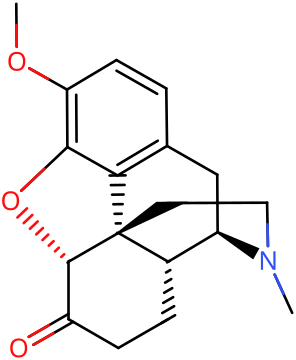
Hydrocodone Stats & Data
COc1ccc2CC3N(C)CCC45C3CCC(=O)C5Oc1c24LLPOLZWFYMWNKH-CMKMFDCUSA-NPharmacology
DrugBankDescription
Hydrocodone is a synthetic opioid derivative of codeine. It is commonly used in combination with acetaminophen to control moderate to severe pain. Historically, hydrocodone has been used as a cough suppressant although this has largely been replaced by dextromethorphan in current cough and cold formulations. Hydrocodone's more potent metabolite, hydromorphone has also found wide use as an analgesic and is frequently used in cases of severe pain. The FDA first approved Hydrocodone for use as part of the cough suppressant syrup Hycodan in March of 1943.
Mechanism of Action
Hydrocodone binds to the mu opioid receptor (MOR) with the highest affinity followed by the delta opioid receptors (DOR). Hydrocodone's agonist effect at the MOR is considered to contribute the most to its analgesic effects. Both MOR and DOR are Gi/o coupled and and produces its signal through activation of inward rectifier potassium (GIRK) channels, inhibition of voltage gated calcium channel opening, and decreased adenylyl cyclase activity. In the dorsal horn of the spinal cord, activation of pre-synaptic MOR on primary afferents the inhibition of calcium channel opening and increased activity of GIRK channels hyperpolarizes the neuron and prevents release of neurotransmitters. Post-synaptic MOR can also prevent activation of neurons by glutamate through the aforementioned mechanisms. Hydrocodone can also produce several actions in the brain similarly to other opioids. Activation of MOR in the periaquaductal gray (PAG) inhibits the GABAergic tone on medulo-spinal neurons. This allows these neurons, which project to the dorsal horn of the spinal cord, to suppress pain signalling in secondary afferents by activating inhibitory interneurons. MOR can also inhibit GABAergic neurons in the ventral tegmental area, removing the inhibitory tone on dopaminergic neurons in the nucleus accumbens and contributing to the activation of the brain's reward and addiction pathway.
Pharmacodynamics
Hydrocodone inhibits pain signaling in both the spinal cord and brain . Its actions in the brain also produce euphoria, respiratory depression, and sedation.
Metabolism
Hydrocodone undergoes oxidative O-demethylation to form hydromorphone, a more potent active metabolite. Though hydromorphone is active it is not present in sufficient quantities to contribute significantly to hydrocodone's therapeutic effects. Both hydrocodone and hydromorphone form 6-α- and 6-β-hydroxy metabolites through 6-ketoreduction. The hydroxy metabolites and hydromorphone can form glucuronide conjugates. Hydrocodone also undergoes oxidative N-demthylation to norhydrocodone. O-demethylation is primarily catalyzed by CYP2D6 while N-demethylation is primarily CYP3A4.
Absorption
The absolute bioavailability of hydrocodone has not been characterized due to lack of an IV formulation. The liquid formulations of hydrocodone have a Tmax of 0.83-1.33 h. The extended release tablet formulations have a Tmax of 14-16 h. The Cmax remains dose proportional over the range of 2.5-10 mg in liquid formulations and 20-120 mg in extended release formulations. Administration with food increases Cmax by about 27% while Tmax and AUC remain the same. Administration with 40% ethanol has been observed to increase Cmax 2-fold with an approximate 20% increase in AUC with no change in Tmax. 20% alcohol produces no significant effect.
Indication
Hydrocodone is indicated for the management of acute pain, sometimes in combination with acetaminophen or ibuprofen, as well as the symptomatic treatment of the common cold and allergic rhinitis in combination with decongestants, antihistamines, and expectorants.
Half-life
The half-life of elimination reported for hydrocodone is 7-9 h.
Protein Binding
Hydrocodone is 36% bound to plasma proteins.
Elimination
Most hydrocodone appears to be eliminated via a non-renal route as renal clearance is substantially lower than total apparent clearance. Hepatic metabolism may account for a portion of this, however the slight increase in serum concentration and AUC seen in hepatic impairment indicates a different primary route of elimination.
Volume of Distribution
The apparent volume of distribution ranges widely in published literature. The official FDA labeling reports a value of 402 L. Pharmacokinetic studies report values from 210-714 L with higher values associated with higher doses or single dose studies and lower values associated with lower doses and multiple dose studies. Hydrocodone has been observed in human breast milk at levels equivalent to 1.6% of the maternal dosage. Only 12 of the 30 women studied had detectable concentrations of hydromorphone at mean levels of 0.3 mcg/kg/day.
Clearance
Official FDA labeling reports an apparent clearance of 83 L/h. Pharmacokinetic studies report values ranging from 24.5-58.8 L/h largely dependent on CYP2D6 metabolizer status.
Receptor Profile
Receptor Actions
Receptor Binding
Measured Affinities
Guide to PHARMACOLOGYMeasured binding and functional data for hydrocodone, curated by the IUPHAR/BPS Guide to PHARMACOLOGY. Each row cites the paper it came from. Lower concentrations mean tighter binding — a value in the sub-nanomolar range indicates a very potent interaction.
| Target | Action | Measure | Value | Concentration | Species | Source |
|---|---|---|---|---|---|---|
| μ receptor OPRM1 | Agonist | pKi | 8.7 | 2 nM | Human | PMID 22439881 |
| κ receptor OPRK1 | Agonist | pKi | 6.59 | 257.04 nM | Human | PMID 22439881 |
Reading this. pKi, pEC50 and pIC50 are negative log molar values, so a higher number means a tighter interaction; the concentration column converts them for you. Values from non-human species are laboratory measurements and do not translate directly to human effect. Receptor affinity is not a dose — it describes what a molecule binds, not how much of it is safe to take.
Receptor data from the IUPHAR/BPS Guide to PHARMACOLOGY (v2026.2), licensed CC BY-SA 4.0. Matched to this substance by InChIKey.
History & Culture
1920–1943
Hydrocodone was first synthesized in Germany in 1920 by chemists Carl Mannich and Helene Löwenheim as a semi-synthetic derivative of codeine. The compound was patented in 1923 and first marketed by the pharmaceutical company Knoll under the trade name Dicodid beginning in February 1924. This naming convention followed Knoll's established pattern for their opioid product line, which included Dilaudid (hydromorphone, 1926), Dinarkon (oxycodone, 1917), Dihydrin (dihydrocodeine, 1911), and Dimorphan (dihydromorphine). The United States Food and Drug Administration approved hydrocodone on March 23, 1943, initially for use as the cough suppressant syrup Hycodan. Health Canada subsequently approved the drug under the same brand name for the Canadian market.
Hydrocodone became predominantly prescribed within the United States, with the International Narcotics Control Board reporting that 99% of the worldwide supply was consumed in the United States as of 2007, a figure that remained consistent through 2010. The drug reached its peak prevalence in 2010 when it became the most prescribed medication in the country, with 131.2 million prescriptions written for hydrocodone-paracetamol combinations that year. The most widely recognized hydrocodone formulation has been Vicodin, produced by Knoll Laboratories. The trade name reportedly derives from the Roman numeral VI, referencing hydrocodone's approximately six-fold potency relative to codeine—where 5 mg of hydrocodone produces effects comparable to 30 mg of codeine.
2006–2014
Beginning in late 2006, the FDA initiated recalls of numerous hydrocodone-containing cough formulations following reports of deaths in infants and children under six years of age. By August 2010, enforcement actions had resulted in the removal of 88% of these hydrocodone-containing medications from the market. Concurrently, the FDA began considering restrictions on hydrocodone and oxycodone fixed-combination products due to paracetamol-related liver toxicity concerns. In late 2012, Vicodin's manufacturer reformulated their hydrocodone tablets to reduce the acetaminophen content to 300 mg per tablet, addressing the risk of liver damage associated with higher paracetamol doses. A long-acting formulation was approved for medical use in the United States in 2013, with Zohydro ER becoming the only hydrocodone brand available without acetaminophen, offered in doses up to 50 mg. The US government imposed more restrictive prescribing requirements in 2014, reclassifying all hydrocodone products from Schedule III to Schedule II effective October 6, 2014. This change followed a 2013 FDA advisory panel recommendation responding to DEA concerns about abuse potential. Prior to rescheduling, products containing 15 mg or less of hydrocodone per dosage unit had been classified as Schedule III, encompassing nearly all prescribed hydrocodone formulations including Vicodin. By 2011, hydrocodone products were involved in approximately 100,000 abuse-related emergency department visits in the United States, more than double the number recorded in 2004.
Hydrocodone has not been shown to be toxic and is physically benign at reasonable dosages. As with all opioids, long-term effects can vary but can include diminished libido, apathy and memory loss. Some people may also have an allergic reaction to hydrocodone, such as the swelling of skin and rashes. It is potentially fatal at heavy dosages. Like most opioids, unadulterated hydrocodone at appropriate dosages does not cause many long-term complications other than dependence and constipation.
LD50
LD50: 85.7mg/kg (Parenteral-subcutaneous, Mouse) (A308)
Carcinogenicity
No indication of carcinogenicity to humans (not listed by IARC).
Addiction & dependence
As with other opiate-based painkillers, the chronic use of hydrocodone can be considered moderately addictive and is capable of causing both physical and psychological dependence. When physical dependence has developed, withdrawal symptoms may occur if a person suddenly stops their usage. Most of these symptoms (like with other opioids) are somatic in their manifestation.
Effect Profile
Curated + 166 ReportsStrong euphoria, pain relief, and sedation with strong itching/nausea
Tolerance & Pharmacokinetics
drugs.wikiNo tolerance chart. Our decay curves for opioids were estimates, and a curve can make tolerance look longer-lasting than it is, which is the dangerous direction.
Opioid tolerance drops fast when you stop, and even a few days off can be enough, so a dose that used to be normal can now stop your breathing. Overdose deaths rise sharply after prison, detox or leaving treatment, and tolerance also falls during a hospital stay. After any break, start with a much smaller amount, try a test dose first, don't use alone, and keep naloxone within reach. Alcohol, benzodiazepines, gabapentinoids and other sedatives make an opioid overdose much more likely.
Sources: FRANK: heroin · National Harm Reduction Coalition · WHO: opioid overdose · Merrall et al. 2010 · Binswanger et al. 2007 · Strang et al. 2003 · FDA 2019: gabapentinoids and breathing
Cross-Tolerances
Demographics
Gender Distribution
Age Distribution
Reports Over Time
Effect Analysis
Erowid + BluelightEffects aggregated from 166 experience reports (125 single-substance Erowid + 41 Bluelight)
Effect Sentiment Distribution
Confidence Distribution
Each bar is the share of reports mentioning the effect; its whisker, and the band on the rows below, is the 95% interval: where the share could plausibly be with other reports of the same kind.
Positive Effects 43
Adverse Effects 32
Show 12 more adverse effects
Show 18 neutral or unclassified mentions
Also reported in combinations. In the 141 Hydrocodone reports where another drug was taken too, 21 (14.9%) mention hospital, emergency services or an overdose, 7 (5.0%) a seizure and 1 (0.7%) psychosis. In the 125 single-substance reports: 4.8%, 0.0% and 0.0%. One or more of the three comes up more often in the combination reports (17.7% against 4.8%), by more than chance would explain; that does not show the combination caused it. These are not in the figures above: they cannot be put down to Hydrocodone alone, and a mention is not always something that happened to the writer.
Dose-Response Correlation
How effect frequency changes across dose levels. Whiskers, and the numbers' hover text, give each figure's 95% interval.
Not drawn, too few reports (a dose tier needs 20): Oral Light (n=13), Oral Strong (n=10). Why 20?
View data table
| Effect | Common (n=49) |
|---|---|
| Sedation | 42.9% (95% interval 30 to 57 percent) |
| Euphoria | 36.7% (95% interval 25 to 51 percent) |
| Music Enhancement | 34.7% (95% interval 23 to 49 percent) |
| Empathy | 30.6% (95% interval 20 to 44 percent) |
| Nausea | 30.6% (95% interval 20 to 44 percent) |
| Stimulation | 26.5% (95% interval 16 to 40 percent) |
| Anxiety | 18.4% (95% interval 10 to 31 percent) |
| Confusion | 16.3% (95% interval 8 to 29 percent) |
| Auditory Effects | 16.3% (95% interval 8 to 29 percent) |
| Motor Impairment | 14.3% (95% interval 7 to 27 percent) |
| Body High | 14.3% (95% interval 7 to 27 percent) |
| Headache | 14.3% (95% interval 7 to 27 percent) |
| Dissociation | 10.2% (95% interval 4 to 22 percent) |
| Color Enhancement | 8.2% (95% interval 3 to 19 percent) |
| Closed-Eye Visuals | 8.2% (95% interval 3 to 19 percent) |
Subjective Effect Ontology
Experience ReportsStructured effect tags extracted from 307 Erowid & Bluelight experience reports using a controlled vocabulary of 220+ canonical effects across 15 domains.
Emotional
Motor
Dose–Effect Mapping
Experience ReportsHow reported effects shift across dose tiers, based on 125 single-substance experience reports. The shaded band on each bar is its 95% interval. An arrow (↑ ↓) marks a change between the lowest and highest tier that count an effect only when the gap is bigger than chance would explain; ~ means no clear change. How changes are called
Not drawn, too few reports (a dose tier needs 20): Oral Light (n=13), Oral Strong (n=10). Why 20?
Limited tier coverage — most reports fall within the Common range. Effects at other dose levels may not be represented.
| Effect | Common (n=49) | Change with dose |
|---|---|---|
| sedation | ||
| euphoria | ||
| music enhancement | ||
| empathy | ||
| nausea | ||
| stimulation | ||
| anxiety | ||
| confusion | ||
| auditory effects | ||
| motor impairment | ||
| body high | ||
| headache | ||
| dissociation | ||
| color enhancement | ||
| closed-eye visuals | ||
| visual distortions | ||
| tactile enhancement | ||
| muscle tension | ||
| pupil dilation | ||
| hospital |
Showing top 20 of 24 effects
Dosage Distribution
Dose distribution from experience reports, one dose per report (the first listed). Doses above Q3 + 3×IQR, far above what people typically take, are left out of the median and range and listed under each route: most are real heavy doses or overdoses, not mistakes.
5 reports gave a dose above the typical range (70–300 mg), so they are not in the figures above. 1 of them mentions hospital, emergency services or an overdose. Listing a dose here does not mean it is safe.
1 dose more than 50 times the median may be a typing or unit error and is not in the figures either: check the report.
Real-World Dose Distribution
ErowidFrom 392 of 465 recorded dose entries: those that state a weight (mg, g or µg), in routes with at least five of them. Values above Q3 + 3×IQR, far above what people typically take, are left out; they can include real heavy doses and overdoses, not only mistakes.
Oral (n=358)
Insufflated (n=17)
Common Combinations
Most co-occurring substances, as a share of all 266 reports filed under Hydrocodone; whiskers are 95% intervals
Form / Preparation
Most common forms and preparations, as a share of the 211 reports that give one; whiskers are 95% intervals
Body-Weight Dosing
Dose per kg of body weight, one dose per report (the first listed), from reports giving a weight of 30–250 kg. Doses above Q3 + 3×IQR, far above what people typically take, are left out of the median and range and listed under each route.
Oral
4 reports gave a dose above the typical range (1.185–4.412 mg/kg), so they are not in the figures above. 1 of them mentions hospital, emergency services or an overdose. Listing a dose here does not mean it is safe.
1 dose more than 50 times the median may be a typing or unit error and is not in the figures either: check the report.
Show the reports
- 4.412 mg/kg · another drug taken too
- 1.377 mg/kg
- 1.186 mg/kg · another drug taken too · mentions hospital, emergency services or an overdose
- 1.185 mg/kg
Possibly a typing or unit error:
- 13.1 mg/kg · another drug taken too
Insufflated
Redose Patterns
Redosing behavior across 231 reports
Opioid Equivalence (MME)
NIH HEAL 2024 & CDC 2022Hydrocodone 10 mg oral ≈ 10 mg Morphine oral
Legal Status
| Country | Status | Notes |
|---|---|---|
| Australia | Schedule 8 (S8) | Classified as a controlled drug requiring a prescription. Schedule 8 substances are considered drugs of addiction with recognized therapeutic use. |
| Austria | Controlled (Suchtmittelgesetz) | Regulated under the Austrian Suchtmittelgesetz (SMG) in a similar manner to Germany. Since 2002, hydrocodone products from Germany and elsewhere in the European Union have been available under Article 76 of the Schengen Treaty. |
| Belgium | Not available | Hydrocodone is no longer available for medical use in Belgium. |
| Canada | Schedule I (CDSA) | Controlled under the Controlled Drugs and Substances Act. Available only by prescription, both as a single-ingredient formulation and in proprietary combinations with NSAIDs or paracetamol. |
| France | Prohibited narcotic | Classified as a prohibited narcotic substance. Hydrocodone is no longer available for medical use in France. |
| Germany | Anlage III BtMG | Listed under Anlage III of the Betäubungsmittelgesetz (Narcotics Act) as a Suchtgift. Can only be prescribed using a special narcotic prescription form (Betäubungsmittelrezept). |
| Luxembourg | Prescription only | Available by prescription under the trade name Biocodone. Prescriptions are more commonly issued for use as a cough suppressant (antitussive) rather than for pain relief. |
| Mexico | Prescription only | Requires a valid prescription for legal acquisition. Not available over-the-counter despite contrary rumors. |
| Netherlands | List I (Opiumwet) | Classified as a List I substance under the Opium Law (Opiumwet). Hydrocodone is not available for medical use and possession without a prescription or license is illegal. |
| Russia | Schedule I | Classified as a Schedule I controlled substance under Russian drug control legislation. |
| Sweden | Not available | Hydrocodone is no longer available for medical use in Sweden. The last remaining formulation was deregistered in 1967. |
| Switzerland | Controlled (Verzeichnis A) | Listed as a controlled substance under Verzeichnis A of Swiss narcotics legislation. Medicinal use is permitted with appropriate authorization. |
| United Kingdom | Class A (Schedule 2) | Listed as a Class A drug under the Misuse of Drugs Act 1971 and Schedule 2 under the Misuse of Drugs Regulations. Hydrocodone is not available for medical use in the UK; dihydrocodeine formulations are commonly used as alternatives. |
| United States | Schedule II | As of October 6, 2014, all hydrocodone products are designated Schedule II controlled substances under the Controlled Substances Act. Prior to this date, combination products containing 15 mg or less per dosage unit were classified as Schedule III. Prescriptions cannot be refilled and require a new written prescription for each fill. |
Harm Reduction
drugs.wikiMost hydrocodone IR products are co‑formulated with acetaminophen (APAP); keep total APAP from all sources ≤ 4,000 mg in 24 h (lower in hepatic disease or chronic alcohol use) to reduce risk of severe liver injury. Dose‑dumping and fatal overdose can occur if extended‑release hydrocodone (e.g., Hysingla ER, Zohydro ER) is crushed, chewed, or dissolved—swallow whole only. Respiratory depression risk is highest during initiation, after dose increases, or when combined with other CNS depressants; avoid mixing with alcohol, benzodiazepines, Z‑drugs, barbiturates, or GHB/GBL. Hydrocodone is metabolized by CYP2D6 to hydromorphone (active) and by CYP3A4 to norhydrocodone (inactive); strong CYP3A4 inhibitors (including ritonavir in Paxlovid) can dangerously raise hydrocodone levels, while inducers can reduce analgesia and precipitate withdrawal; CYP2D6 inhibitors can blunt hydromorphone formation and alter response. Combination with serotonergic drugs (e.g., SSRIs/SNRIs/TCAs, some muscle relaxants, tramadol) has produced serotonin‑toxicity cases; monitor or avoid high‑risk combinations. Counterfeit opioid tablets adulterated with potent synthetic opioids (e.g., nitazenes/fentanils) have been reported in Europe; avoid non‑pharmacy pills and consider carrying naloxone; do not use alone. Opioid‑naïve individuals and those with reduced tolerance after a break are at particularly high overdose risk—start low, go slow, and space doses ≥ 4–6 h. Common adverse effects include sedation, miosis, pruritus, nausea, and constipation; maintain bowel regimen (hydration, fiber, stimulant + stool softener as needed). Avoid driving or hazardous tasks while sedated; impairment can persist beyond subjective effects. Seek urgent care for severe drowsiness, slowed or irregular breathing, cyanosis, or unresponsiveness; naloxone is the first‑line reversal for life‑threatening respiratory depression.