
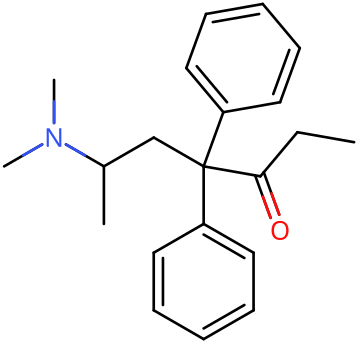
Methadone Stats & Data
CCC(=O)C(CC(C)N(C)C)(C1=CC=CC=C1)C2=CC=CC=C2USSIQXCVUWKGNF-UHFFFAOYSA-NPharmacology
DrugBankDescription
Methadone is a potent synthetic analgesic that works as a full µ-opioid receptor (MOR) agonist and N-methyl-d-aspartate (NMDA) receptor antagonist. As a full MOR agonist, methadone mimics the natural effects of the body's opioids, endorphins, and enkephalins through the release of neurotransmitters involved in pain transmission. It also has a number of unique characteristics that have led to its increased use in the last two decades; in particular, methadone has a lower risk of neuropsychiatric toxicity compared to other opioids (due to a lack of active metabolites), minimal accumulation in renal failure, good bioavailability, low cost, and a long duration of action. Due to its unique mechanism of action, methadone is particularly useful for the management of hard to treat pain syndromes such as neuropathic pain and cancer pain requiring higher and more frequent doses of shorter-acting opioids. Compared with morphine, the gold standard reference opioid, methadone also acts as an agonist of κ- and σ-opioid receptors, as an antagonist of the N-methyl-D-aspartate (NMDA) receptor, and as an inhibitor of serotonin and norepinephrine uptake. Specifically by inhibiting the NMDA receptor, methadone dampens a major excitatory pain pathway within the central nervous system.
Mechanism of Action
Methadone is a synthetic opioid analgesic with full agonist activity at the µ-opioid receptor. While agonism of the µ-opioid receptor is the primary mechanism of action for the treatment of pain, methadone also acts as an agonist of κ- and σ-opioid receptors within the central and peripheral nervous systems. Interestingly, methadone differs from morphine (which is considered the gold standard reference opioid) in its antagonism of the N-methyl-D-aspartate (NMDA) receptor and its strong inhibition of serotonin and norepinephrine uptake, which likely also contributes to its antinociceptive activity. Methadone is administered as a 50:50 racemic mixture of (R)- and (S)-stereoisomers, with (R)-methadone demonstrating ~10-fold higher affinity and potency for the µ-opioid receptor than the (S) stereoisomer. The analgesic activity of the racemate is almost entirely due to the (R)-isomer, while the (S)-isomer lacks significant respiratory depressant activity but does have antitussive effects. While methadone shares similar effects and risks of other opioids such as morphine, hydromorphone, oxycodone, and fentanyl it has a number of unique pharmacokinetic and pharmacodynamic properties that distinguish it from them and make it a useful agent for the treatment of opioid addiction.
Pharmacodynamics
Overall, methadone's pharmacological actions result in analgesia, suppression of opioid withdrawal symptoms, sedation, miosis (through binding to receptors in the pupillary muscles), sweating, hypotension, bradycardia, nausea and vomiting (via binding within the chemoreceptor trigger zone), and constipation. Like many basic drugs, methadone also enters mast cells and releases histamine by a non-immunological mechanism leading to flushing, pruritus, and urticaria, which can commonly be misattributed to an allergic reaction. Compared to other opioids, methadone has fewer active metabolites and therefore a lower risk of neuropsychiatric toxicity. This means that higher doses needed to manage severe pain or addiction are less likely to result in delirium, hyperalgesia, or seizures. Similar to morphine, both methadone isomers are 5-HT(3) receptor antagonists, although l-methadone produces greater inhibition than d-methadone. Methadone's effects are reversible by naloxone with a pA2 value similar to its antagonism of morphine. **Dependence and Tolerance** As with other opioids, tolerance and physical dependence may develop upon repeated administration of methadone and there is a potential for development of psychological dependence. Physical dependence and tolerance reflect the neuroadaptation of the opioid receptors to chronic exposure to an opioid and are separate and distinct from abuse and addiction.
Metabolism
Methadone undergoes fairly extensive first-pass metabolism. Cytochrome P450 enzymes, primarily CYP3A4, CYP2B6, and CYP2C19 and to a lesser extent CYP2C9, CYP2C8, and CYP2D6, are responsible for conversion of methadone to EDDP (2-ethyl-1,5-dimethyl-3,3-diphenylpyrrolidine) and other inactive metabolites, which are excreted mainly in the urine. Methadone first undergoes N-demethylation to form a highly unstable compound that spontaneously converts to EDDP through cyclization and dehydration. EDDP is then converted to 2-ethyl5-methyl-3,3-diphenyl-1-pyrroline (EDMP). Both EDDP and EDMP are inactive. The CYP isozymes also demonstrate different affinities for metabolizing the different methadone enantiomers: CYP2C19, CYP3A7, and CYP2C8 preferentially metabolize (R)-methadone while CYP2B6, CYP2D6, and CYP2C18 preferentially metabolize (S)-methadone. CYP3A4 does not have an enantiomer preference. Single nucleotide polymorphisms (SNPs) within the cytochrome P450 enzymes can impact methadone pharmacokinetics and contribute to the interindividual variation in response to methadone therapy. In particular, CYP2B6 polymorphisms have been shown to impact individual response to methadone as it is the predominant determinant involved in the N-demethylation of methadone, clearance, and the metabolic ratios of methadone\/EDDP.
Absorption
Methadone is one of the more lipid-soluble opioids and is well absorbed from the gastrointestinal tract. Following oral administration of methadone, bioavailability ranges from 36-100%, with a marked interindividual variation. It can be detected in blood as soon as 15-45 minutes following administration with peak plasma concentrations achieved between 1 to 7.5 hours. A second peak is observed ~4 hours after administration and is likely due to enterohepatic circulation. Dose proportionality of methadone pharmacokinetics is not known. Following administration of daily oral doses ranging from 10 to 225 mg the steady-state plasma concentrations ranged between 65 to 630 ng/mL and the peak concentrations ranged between 124 to 1255 ng/mL. Effect of food on the bioavailability of methadone has not been evaluated. Slower absorption is observed in opioid users compared to healthy subjects, which may reflect the pharmacological effect of opioids in slowing gastric emptying and mobility. Due to the large inter-individual variation in methadone pharmacokinetics and pharmacodynamics, treatment should be individualized to each patient. There was an up to 17-fold interindividual variation found in methadone blood concentrations for a given dosage, likely due in part to individual variability in CYP enzyme function.
Indication
Methadone is indicated for the management of pain severe enough to require an opioid analgesic and for which alternative treatment options are inadequate. It's recommended that use is reserved for use in patients for whom alternative treatment options (eg, nonopioid analgesics, opioid combination products) are ineffective, not tolerated, or would be otherwise inadequate to provide sufficient management of pain. Methadone is also indicated for detoxification treatment of opioid addiction (heroin or other morphine-like drugs), and for maintenance substitution treatment for opioid dependence in adults in conjunction with appropriate social and medical services.
Half-life
Due to interindividual differences in pharmacokinetics, estimates of methadone's half-life have ranged from 15–207 hours with official monographs listing it between 7-59 hours.
Protein Binding
Methadone is highly bound to plasma proteins. While it primarily binds to α1-acid glycoprotein (85-90%), it also binds to albumin and other tissue and plasma proteins including lipoproteins. Methadone is unusual in the opioid class, in that there is extensive binding to tissue proteins and fairly slow transfer between some parts of this tissue reservoir and the plasma.
Elimination
The elimination of methadone is mediated by extensive biotransformation, followed by renal and fecal excretion. Unmetabolized methadone and its metabolites are excreted in urine to a variable degree.
Volume of Distribution
Due to interindividual differences in pharmacokinetics, estimates of methadone's volume of distribution have ranged from 189-470 L with monographs listing it between 1.0-8.0L/kg. As this is higher than physiological volumes of total body water, methadone is highly distributed in the body including brain, gut, kidney, liver, muscle, and lung. A population pharmacokinetic study found that subject gender and weight explained ~33% of the variance in the apparent volume of distribution of methadone. Methadone is found to be secreted in saliva, sweat, breast milk, amniotic fluid and umbilical cord plasma. The concentration in cord blood is about half the maternal levels.
Clearance
Due to interindividual differences in pharmacokinetics, estimates of methadone's clearance have ranged from 5.9–13 L/h hours with approved monographs listing it between 1.4 to 126 L/h.
Receptor Profile
Receptor Actions
Receptor Binding
Measured Affinities
Guide to PHARMACOLOGYMeasured binding and functional data for methadone, curated by the IUPHAR/BPS Guide to PHARMACOLOGY. Each row cites the paper it came from. Lower concentrations mean tighter binding — a value in the sub-nanomolar range indicates a very potent interaction.
| Target | Action | Measure | Value | Concentration | Species | Source |
|---|---|---|---|---|---|---|
| μ receptor OPRM1 | Agonist | pIC50 | 8.39 | 4.07 nM | Human | PMID 11585443 |
Reading this. pKi, pEC50 and pIC50 are negative log molar values, so a higher number means a tighter interaction; the concentration column converts them for you. Values from non-human species are laboratory measurements and do not translate directly to human effect. Receptor affinity is not a dose — it describes what a molecule binds, not how much of it is safe to take.
Receptor data from the IUPHAR/BPS Guide to PHARMACOLOGY (v2026.2), licensed CC BY-SA 4.0. Matched to this substance by InChIKey.
History & Culture
1937–1943
Methadone was developed in 1937 in Germany by chemists Gustav Ehrhart and Max Bockmühl, working for I.G. Farbenindustrie AG at the Farbwerke Hoechst facility. The research was motivated by Germany's shortage of opium and morphine, creating demand for a synthetic opioid that could be manufactured from readily available precursors. On September 11, 1941, Bockmühl and Ehrhart filed a patent application for the compound under the designation Hoechst 10820, with the trade name Polamidon—a name that remains in regular use in Germany today. Unlike morphine and other opium-derived alkaloids, the structure of methadone bore little resemblance to traditional opiates. The compound was brought to market in 1943 and saw widespread use by the German military during World War II as a substitute for morphine.
1945–1947
Following World War II, all German patents, trade names, and research records were requisitioned and expropriated by the Allied forces. Documentation from I.G. Farbenkonzern's research at Farbwerke Hoechst was confiscated by the U.S. Department of Commerce Intelligence and subsequently investigated by a Technical Industrial Committee of the U.S. Department of State before being transferred to the United States. In 1947, the Council on Pharmacy and Chemistry of the American Medical Association assigned the compound the generic name "methadone." With the I.G. Farbenkonzern patent rights no longer protected, pharmaceutical companies could acquire commercial production rights for just one dollar. That same year, Eli Lilly and Company introduced methadone to the American market as an analgesic under the trade name Dolophine. An urban legend would later emerge claiming the name derived from Adolf Hitler, but Dolophine was actually a contraction combining the Latin words "dolor" (pain) and "finis" (end), literally meaning "pain end."
1950s–1976
Research into methadone's potential for treating opioid addiction began in the 1950s at the Addiction Research Center of the Narcotics Farm in Lexington, Kentucky. In the 1960s, physicians Robert Dole and Marie Nyswander at Rockefeller University in New York City conducted further studies that proved influential in establishing methadone maintenance as a treatment modality. By 1976, methadone clinics had opened across major American cities including Chicago, New York, and New Haven. New York City alone was treating approximately 38,000 patients through its methadone programs by this time. Methadone treatment for opioid dependence has since gained global recognition, with the substance included on the World Health Organization's List of Essential Medicines.
Methadone has a moderate toxicity relative to dose. As with all opioids, long-term effects can vary but can include diminished libido, apathy and memory loss. It is also potentially lethal when mixed with depressants like alcohol or benzodiazepines and generally has a wider range of substances which it is dangerous to combine with in comparison to other opioids. Methadone is known to lower the seizure threshold. It should not be taken during benzodiazepine withdrawals as this can potentially cause seizures.
Carcinogenicity
No indication of carcinogenicity to humans (not listed by IARC).
Toxicity (DrugBank)
In severe overdosage, particularly by the intravenous route, apnea, circulatory collapse, cardiac arrest, and death may occur.
Effect Profile
Curated + 105 ReportsStrong euphoria, pain relief, and sedation with strong itching/nausea
Tolerance & Pharmacokinetics
drugs.wikiNo tolerance chart. Our decay curves for opioids were estimates, and a curve can make tolerance look longer-lasting than it is, which is the dangerous direction.
Opioid tolerance drops fast when you stop, and even a few days off can be enough, so a dose that used to be normal can now stop your breathing. Overdose deaths rise sharply after prison, detox or leaving treatment, and tolerance also falls during a hospital stay. After any break, start with a much smaller amount, try a test dose first, don't use alone, and keep naloxone within reach. Alcohol, benzodiazepines, gabapentinoids and other sedatives make an opioid overdose much more likely.
Sources: FRANK: heroin · National Harm Reduction Coalition · WHO: opioid overdose · Merrall et al. 2010 · Binswanger et al. 2007 · Strang et al. 2003 · FDA 2019: gabapentinoids and breathing
Cross-Tolerances
Demographics
Gender Distribution
Age Distribution
Reports Over Time
Effect Analysis
Erowid + BluelightEffects aggregated from 105 experience reports (95 single-substance Erowid + 10 Bluelight)
Effect Sentiment Distribution
Confidence Distribution
Each bar is the share of reports mentioning the effect; its whisker, and the band on the rows below, is the 95% interval: where the share could plausibly be with other reports of the same kind.
Rows resting on fewer than 20 reports show a count (“3 of 7”) instead of a bar. Why 20?
Positive Effects 25
Adverse Effects 20
Show 6 neutral or unclassified mentions
Also reported in combinations. In the 54 Methadone reports where another drug was taken too, 9 (16.7%) mention hospital, emergency services or an overdose, 1 (1.9%) a seizure and 2 (3.7%) psychosis. In the 95 single-substance reports: 17.9%, 4.2% and 2.1%. These are not in the figures above: they cannot be put down to Methadone alone, and a mention is not always something that happened to the writer.
Dose-Response Correlation
How effect frequency changes across dose levels. Whiskers, and the numbers' hover text, give each figure's 95% interval.
Not drawn, too few reports (a dose tier needs 20): Oral Common (n=10). Why 20?
View data table
| Effect | Heavy (n=26) |
|---|---|
| Sedation | 34.6% (95% interval 19 to 54 percent) |
| Confusion | 30.8% (95% interval 16 to 50 percent) |
| Empathy | 30.8% (95% interval 16 to 50 percent) |
| Anxiety | 30.8% (95% interval 16 to 50 percent) |
| Hospital | 26.9% (95% interval 14 to 46 percent) |
| Stimulation | 23.1% (95% interval 11 to 42 percent) |
| Euphoria | 23.1% (95% interval 11 to 42 percent) |
| Sweating | 15.4% (95% interval 6 to 34 percent) |
| Nausea | 15.4% (95% interval 6 to 34 percent) |
| Tactile Enhancement | 11.5% (95% interval 4 to 29 percent) |
| Motor Impairment | 11.5% (95% interval 4 to 29 percent) |
| Pain Relief | 11.5% (95% interval 4 to 29 percent) |
| Auditory Effects | 11.5% (95% interval 4 to 29 percent) |
| Pupil Dilation | 7.7% (95% interval 2 to 24 percent) |
| Focus Enhancement | 7.7% (95% interval 2 to 24 percent) |
Dose–Effect Mapping
Experience ReportsHow reported effects shift across dose tiers, based on 95 single-substance experience reports. The shaded band on each bar is its 95% interval. An arrow (↑ ↓) marks a change between the lowest and highest tier that count an effect only when the gap is bigger than chance would explain; ~ means no clear change. How changes are called
Not drawn, too few reports (a dose tier needs 20): Oral Common (n=10). Why 20?
Limited tier coverage — most reports fall within the Heavy range. Effects at other dose levels may not be represented.
| Effect | Heavy (n=26) | Change with dose |
|---|---|---|
| sedation | ||
| confusion | ||
| empathy | ||
| anxiety | ||
| hospital | ||
| stimulation | ||
| euphoria | ||
| sweating | ||
| nausea | ||
| tactile enhancement | ||
| motor impairment | ||
| pain relief | ||
| auditory effects | ||
| pupil dilation | ||
| focus enhancement | ||
| seizure | ||
| color enhancement |
Dosage Distribution
Dose distribution from experience reports, one dose per report (the first listed). Doses above Q3 + 3×IQR, far above what people typically take, are left out of the median and range and listed under each route: most are real heavy doses or overdoses, not mistakes.
1 report gave a dose above the typical range (325 mg), so it is not in the figures above. It mentions hospital, emergency services or an overdose. Listing a dose here does not mean it is safe.
Show the report
- 325 mg · mentions hospital, emergency services or an overdose
Real-World Dose Distribution
ErowidFrom 138 of 168 recorded dose entries: those that state a weight (mg, g or µg), in routes with at least five of them. Values above Q3 + 3×IQR, far above what people typically take, are left out; they can include real heavy doses and overdoses, not only mistakes.
Insufflated (n=11)
Oral (n=124)
Common Combinations
Most co-occurring substances, as a share of all 149 reports filed under Methadone; whiskers are 95% intervals
Form / Preparation
Most common forms and preparations, as a share of the 78 reports that give one; whiskers are 95% intervals
Body-Weight Dosing
Dose per kg of body weight, one dose per report (the first listed), from reports giving a weight of 30–250 kg. Doses above Q3 + 3×IQR, far above what people typically take, are left out of the median and range and listed under each route.
Oral
1 report gave a dose above the typical range (6.226 mg/kg), so it is not in the figures above. It mentions hospital, emergency services or an overdose. Listing a dose here does not mean it is safe.
Show the report
- 6.226 mg/kg · mentions hospital, emergency services or an overdose
Unknown
Insufflated
Redose Patterns
Redosing behavior across 127 reports
Opioid Equivalence (MME)
NIH HEAL 2024 & CDC 2022Methadone ~2.1 mg oral ≈ 10 mg Morphine oral (variable, dose-dependent)
Legal Status
| Country | Status | Notes |
|---|---|---|
| Canada | Schedule I | Controlled as a Schedule I substance under the Controlled Drugs and Substances Act. Illegal to sell without authorization and illegal to possess without a valid prescription. Prescriptions can only be obtained from specially licensed physicians, and dispensing is restricted to authorized pharmacies where consumption is typically supervised. |
| France | Annexe I | Classified as an Annexe I medication under French pharmaceutical regulations. Illegal to sell without appropriate licensure and illegal to possess without a valid prescription. Prescription methadone is subject to strict controls. |
| Germany | Anlage III BtMG | Listed under Anlage III of the Betäubungsmittelgesetz (Narcotics Act), indicating it is a controlled substance that may be prescribed for legitimate medical purposes. Requires a special narcotic prescription form (Betäubungsmittelrezept) for dispensing. |
| Italy | Tabella I | Listed in Tabella I of the official tables of narcotic and psychotropic substances (Tabelle delle sostanze stupefacenti e psicotrope). Unauthorized possession, purchase, or sale is prohibited under national drug legislation. |
| Portugal | Decriminalized (personal use) | Personal use was decriminalized under Law 30/2000, effective July 2001. Possession of less than one gram is not treated as a criminal offense, though the substance may be seized and the individual referred to a dissuasion commission for potential treatment. Sale and possession of quantities exceeding personal use limits remain criminal offenses subject to imprisonment. |
| Russia | Schedule I | Classified as a Schedule I controlled substance under Russian federal drug legislation. Production, distribution, and possession are prohibited, including for medical use in opioid substitution therapy programs. |
| Switzerland | Verzeichnis A | Listed under Verzeichnis A of the Swiss controlled substances regulations. Medicinal use is permitted under appropriate medical supervision for pain management and opioid dependence treatment. |
| United Kingdom | Class A, Schedule 2 | Controlled under the Misuse of Drugs Act 1971 as a Class A substance, carrying the most severe penalties for unauthorized production, supply, or possession. Despite its Class A status, methadone may be legally prescribed for the treatment of opioid dependence. |
| United States | Schedule II | Controlled under the Controlled Substances Act as a Schedule II substance. Illegal to sell without DEA licensure and illegal to possess without a valid prescription. May be prescribed for severe pain management. When used for opioid addiction treatment, methadone can only be dispensed through licensed clinics where patients typically receive liquid formulations under direct observation. |
Harm Reduction
drugs.wiki• Methadone has wide interindividual half-life variability; steady state occurs after several half-lives and can take about 5 days on average, but after a dose change complete equilibration may take up to ~12 days. This creates a high risk of unintentional accumulation and delayed respiratory depression during the first 3–7+ days of induction or after dose increases; dose cautiously and avoid stacking.
• Peak serum levels occur ~2–4 hours after an oral dose; clinical effects last much longer than most full-agonist opioids due to tissue redistribution and slow elimination. First doses may feel shorter (~8 h), with subsequent daily doses often covering 18–24 h as tissues saturate.
• Methadone can prolong the QTc interval and, rarely, trigger torsades de pointes. Risk rises with higher doses, drug interactions, electrolyte abnormalities, or baseline cardiac disease. Consider ECG monitoring in patients with risk factors or when escalating to higher doses; alternative OAT (e.g., buprenorphine) shows less QTc effect.
• CYP interactions are clinically significant. Enzyme inducers (rifampin; certain anticonvulsants) can precipitate withdrawal; inhibitors (azoles, macrolides; some SSRIs; grapefruit) can increase methadone exposure and sedation/QT risk. Review new meds and adjust methadone carefully.
• Combining methadone with benzodiazepines, alcohol, gabapentinoids, or other depressants markedly increases overdose risk; co-prescriptions of opioids with these agents are associated with higher overdose rates. Avoid or minimize these combinations; if unavoidable, use the lowest effective doses and add naloxone.
• Methadone has modest serotonin/norepinephrine reuptake inhibition; combining with serotonergic drugs (SSRIs/SNRIs, MAOIs, linezolid, tramadol, etc.) can precipitate serotonin syndrome—use caution and monitor.
• In overdose reversal, naloxone’s action is shorter than methadone’s; renarcotization is common. Observe for at least 6–12 hours and consider naloxone infusion when large or long‑acting opioid exposures (e.g., methadone) are suspected.
• Analgesic duration is shorter than elimination half-life; residual sedation and psychomotor impairment can outlast analgesia by many hours—avoid driving or hazardous tasks until fully alert.
• Missing several consecutive doses lowers tolerance; resuming the prior dose can cause overdose. After ≥3–4 missed doses, reduce and re‑titrate (e.g., 25–50% reduction) per guidelines.
• Pregnancy: Methadone is standard care for OUD in pregnancy, but neonatal abstinence syndrome is expected; dose adjustments may be needed and drug–drug interactions are important.
• Injection-specific risks: Injecting non‑parenteral methadone formulations increases risk of vein/tissue damage and infections due to excipients and non‑sterile technique. If a person injects any opioid, harm‑reduction advice includes sterile equipment/water and filtration.
• Brand and international names vary (e.g., Dolophine, Methadose, Physeptone); liquid formulations may contain sugars, dyes, or alcohol—relevant to allergies, diabetes, and choosing sugar‑free options.
References
Data Sources
Cited References
- DrugWise: Methadone
- Erowid: Methadone Vault
- Ershad et al. 2020: Opioid Toxidrome Following Grapefruit Juice Consumption
- TripSit Factsheet: Methadone
- DrugBank Article: Methadone as a synthetic opioid
- DrugBank Article: Methadone for opioid addiction
- DrugBank Article: Methadone metabolism and interactions
Additional references
- DrugBank: Methadone monograph (brands, metabolism, half-life variance, QT warning)
- TIP 63 (Medications for OUD): Methadone pharmacology, induction, half-life and steady state, QTc risk
- NCBI Bookshelf Annex A1.4 Methadone (time to steady state after dose changes)
- Randomized trial: QT-interval effects of methadone vs buprenorphine
- NCBI StatPearls: Opioid Toxicity (naloxone infusion, long-acting opioid management)
- NCBI StatPearls: Naloxone (monitoring 6–12 h after reversal; long-acting opioids)
- NCBI Guidelines (WHO): Pharmacology of methadone (bioavailability, metabolism, interactions)
- NCBI (Guidelines): Drug interactions involving methadone (inducers/inhibitors; macrolides/azoles; grapefruit)
- Erowid Opioid FAQ (methadone duration first vs subsequent doses)
- TripSit: Methadone (onset/duration caution)
- NCBI StatPearls: Opioid Analgesics (serotonergic opioids including methadone)
- NCBI Evidence Brief: Opioid treatments—co-prescribed benzodiazepines/gabapentinoids and overdose risk
- NCBI: Substance Abuse Tx for Persons with HIV/AIDS—rifampin precipitating methadone withdrawal
- NCBI StatPearls: Rifampin (induces CYP3A4; lowers methadone)
- NCBI StatPearls: Fluconazole (increases methadone levels)